How to Keep Your YouTube Channel Voice Consistent (India 2026)
Your YouTube channel sounds different in every video. Here's the 3-component system Indian creators use to lock voice consistency across 100+ scripts in 2026.
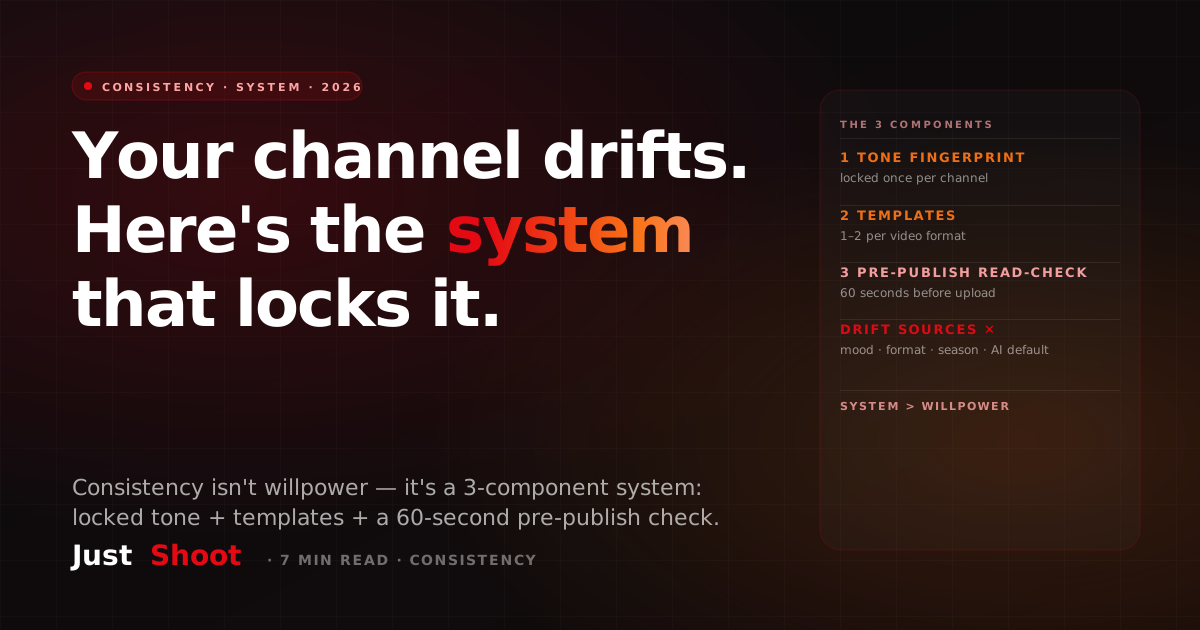
How to Keep Your YouTube Channel Voice Consistent (India 2026)
By Ashok Sachdev, Founder of JustShoot · Published 10 September 2026
Short answer: Channel inconsistency isn't a willpower problem — it's a system problem. Every YouTube channel drifts across 4 axes: writer mood (energetic vs tired), format (talking-head vs tutorial vs story), season (festive vs work-week), and the AI's default rhythm if you use one. The 3-component fix: lock a Tone Fingerprint per channel, build 1–2 reusable templates per video format, and run a 60-second pre-publish read-check. That's the system creators we work with rely on in 2026.
Why every channel drifts — the 4 consistency breakers
Scroll your own uploads from the last six months and read the openings back to back. If you're like most creators at 10–50 videos, you'll hear it: video 12 is playful Hinglish, video 23 sounds like a corporate webinar, video 31 is high-energy, video 38 is flat. Same person, four different channels.
Nobody decides to drift. It happens through four mechanisms, and naming them is half the fix:
- Writer mood. You script differently at 11pm after work than on a fresh Sunday morning. Energy, humour, sentence length — all of it tracks your state, not your channel's identity.
- Format drift. A talking-head rant, a tutorial and a storytime have different structures — fine. The trap is letting the structure change drag your voice along with it, so your tutorials sound like a different human than your rants.
- Season drift. Festive uploads go warm and emotional; exam-season or work-crunch uploads go terse. Over a year, viewers experience this as personality whiplash.
- AI-default drift. The newest and fastest-growing one. Every fresh ChatGPT session regresses to the model's default register — polished, neutral, slightly formal English — unless you re-teach it your voice every single time. We dissected the tells in why AI YouTube scripts sound robotic; for Hinglish channels the flattening is even more aggressive.
None of these respond to "I'll just try harder." Mood, calendar and model defaults don't care about resolve. They respond to systems.
The 3-component voice-consistency system (overview)
Here's what I'd actually set up — three components, each killing specific drift sources:
| Component | What it locks | Which breakers it kills |
|---|---|---|
| 1. Tone Fingerprint (per channel) | The voice: rhythm, blend, hooks, markers | Mood, season, AI-default |
| 2. Templates (1–2 per format) | The structure: beats per format | Format drift |
| 3. 60-second read-check (pre-publish) | The last line of defence | Whatever leaks through |
First, a definition that saves arguments: consistency means recognisable, not identical. Your topics, energy and formats should vary — that's range. What should recur are the signature signals: how you open, how your sentences breathe, where you switch between Hindi and English, the phrases that are unmistakably yours. (Creator-economy research from Buffer and ConvertKit consistently treats recognisable identity and consistency as growth drivers — cited qualitatively; the proof you actually need is in your own retention graphs.)
Component 1 — a locked Tone Fingerprint per channel
The foundation is turning your voice from a vibe into a document — measurable signals an AI (or a human co-writer, or future-you at 11pm) can follow. The Tone Fingerprint does this from your actual uploads: paste your channel, pick 2–5 reference videos that sound most like you, and it extracts seven signals — sentence rhythm, Hindi-English blend ratio, hook strategy, identity markers, transitions, vocabulary level, close pattern. Takes about five minutes; after that, every new script loads the profile automatically.
Two details that matter:
- Pick reference videos deliberately. Choose the uploads where you sounded most like yourself — not the most viral ones. You're fingerprinting your identity, not your luckiest thumbnail. The full method is in the define-test-lock tone framework; the quick Hindi version is channel ka tone kaise check kare.
- For Hinglish channels, the blend ratio is the keystone signal. Where you code-switch is more identifying than what you say — check yours with the free Hinglish Ratio tool.
And to be precise about what this component does: it doesn't lock your voice "forever" — it removes the four drift sources from the drafting step. You still do step 3. (Also worth keeping straight: this is tone cloning — your writing style — not voice cloning, the audio kind. The distinction matters for disclosure rules: voice clone vs tone clone.)
Component 2 — 1–2 reusable script templates per video format
The fingerprint locks how you sound; templates lock how each format is built. For each format you actually publish — talking-head, tutorial, storytime — define the beat structure once: hook style → context beat → value beats → recap → your signature close. Then reuse it every time that format ships.
This kills format drift at the root: your tutorial and your rant now share DNA — same voice, different skeletons — instead of being improvised from scratch in whatever register the day produced. It also murders the blank page, which is where most inconsistency (and most procrastination) is born.
Start from the free template library and customise to your channel. Two rules: maximum two templates per format (more = decision fatigue, which is its own drift source), and the template specifies beats, not lines — it's scaffolding, not a cage. If you write your drafts with AI, the template plus fingerprint travel together into every prompt; the workflow is in how to write YouTube scripts in your own voice with AI.
Component 3 — the 60-second pre-publish read-check
The last line of defence, and the only component that needs discipline. Before you film (or before you upload, for pre-scripted formats), read the script aloud — not silently — and check five things:
- The hook: is it one of your hook patterns, or a generic "In this video, we will…"?
- One identity marker minimum: does your catchphrase / greeting / signature aside appear naturally?
- The blend: read a middle paragraph — is the Hindi-English switch where you would put it?
- Sentence breath: can you perform every sentence in one breath? Long, clause-stacked sentences are the #1 AI tell.
- The close: is it your close pattern, or a generic "like, share and subscribe"?
Anything that fails gets a 30-second rewrite on the spot. Total cost: one minute per video. Total effect: drift gets caught at the door instead of in the comments.
What this looks like across 6 months of uploads
Month 1 you set up: fingerprint locked (5 minutes), two templates built (an evening), read-check habit started. Months 2–6, the compounding shows up quietly:
- Scripting gets faster, because identity decisions are pre-made — the same bottleneck-math we covered in the scripting time post.
- Late-night scripts stop sounding different from Sunday scripts — the system carries the energy your mood doesn't.
- Returning viewers start commenting on you, not just the topic — the "I could hear you saying this" effect, which is recognition compounding.
- A regular cadence becomes survivable, and consistency of voice plus consistency of schedule (pair with best time to upload in India) is the most boring, most reliable growth stack on the platform.
In my experience running JustShoot, the creators who win long-term aren't the most talented writers — they're the ones whose 40th video sounds like their 4th, on purpose.
FAQ
Why does my YouTube channel sound different in every video? Four drift sources: writer mood, format mix, season, and your AI tool's default rhythm if you use one. None are fixable by trying harder — they need a system: a locked tone profile, per-format templates, and a 60-second pre-publish read-check.
Do I need every video to sound identical? No. Consistency means recognisable, not identical. Your hook style, sentence rhythm, code-switch points and signature phrases should recur; topic, energy and format can — and should — vary.
How long does it take to lock a Tone Fingerprint? About five minutes: paste your channel URL, pick 2–5 reference videos that sound most like you, and the tool extracts the 7 signals. After that, every new script loads them automatically — no re-teaching per session.
What if I run multiple shows on one channel? Keep one channel-level Tone Fingerprint and build a separate template per show. The show changes the structure; the channel keeps the voice. That's how one identity carries multiple formats without whiplash.
Can I do this without an AI tool? Yes — write a one-page voice doc, re-read it before every script, keep per-format outline templates, and run the 60-second read-check. It works; it's just slower and leans on discipline, which is exactly what a persisted tool removes from the equation.
Set up component 1 today: lock your channel's voice free with the Tone Fingerprint, then grab a script template for your main format. The read-check is on you — but it's only 60 seconds.
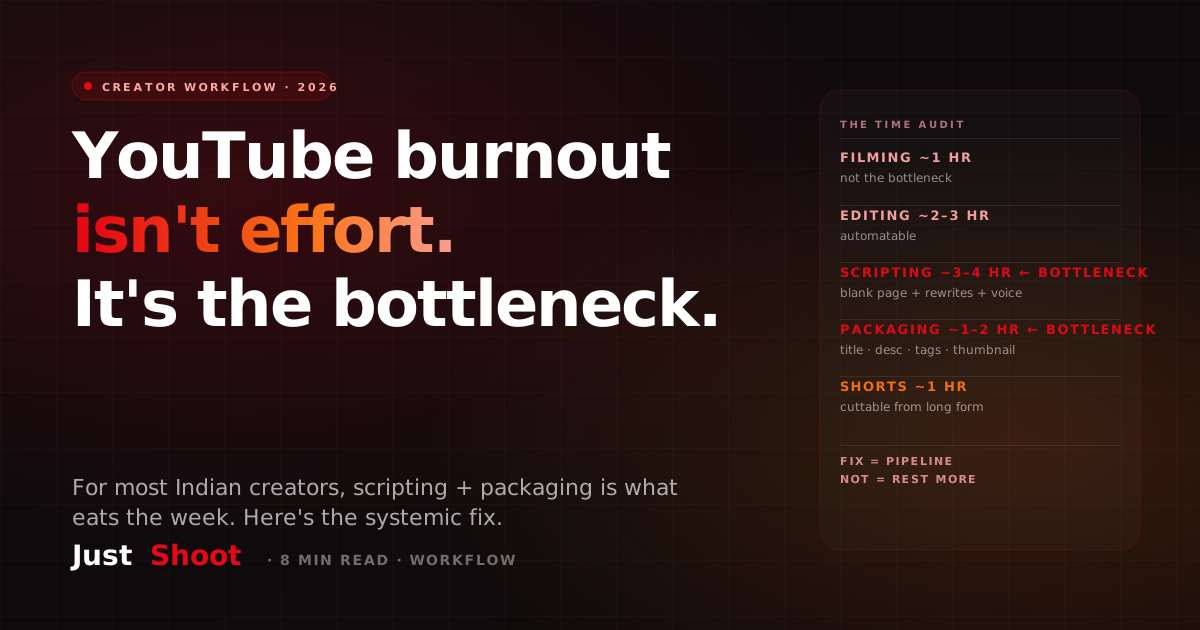
YouTube Burnout Isn't Effort — It's the Scripting Bottleneck (India 2026)
Most YouTube burnout in India isn't laziness — it's the scripting + packaging time per video. Here's the systemic workflow fix for weekly creators in 2026.
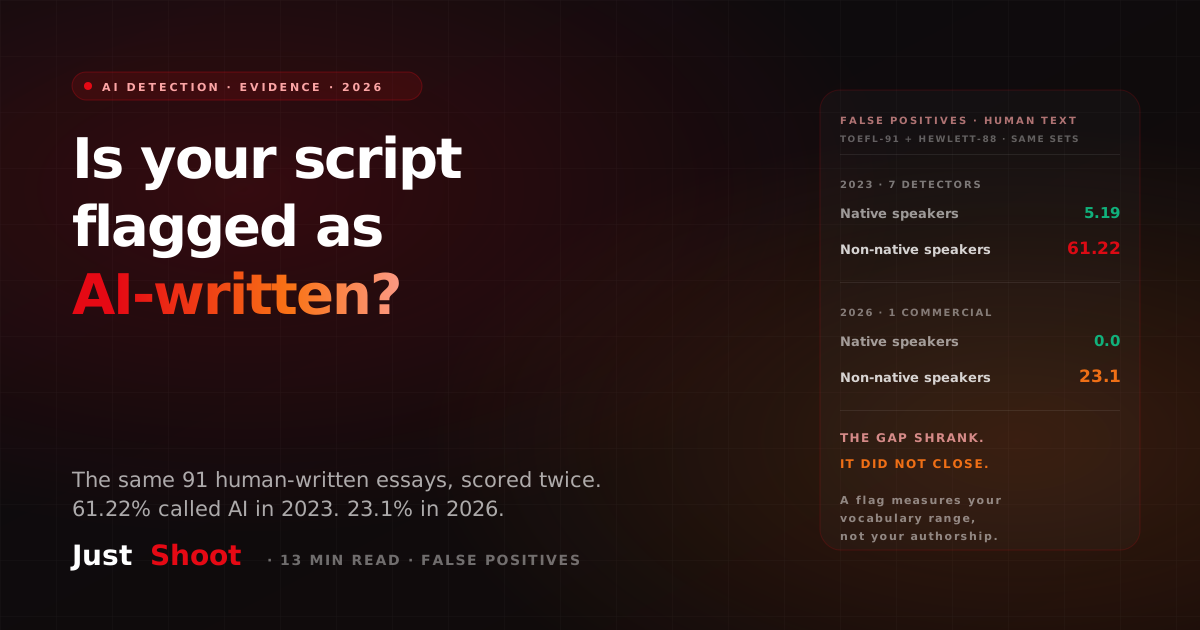
How to Check If Your YouTube Script Sounds AI-Generated (2026)
The same 91 human-written essays were scored by AI detectors twice: 61.22% were flagged as AI in 2023, 23.1% in 2026. Native-speaker essays scored 5.19% and 0.0%.
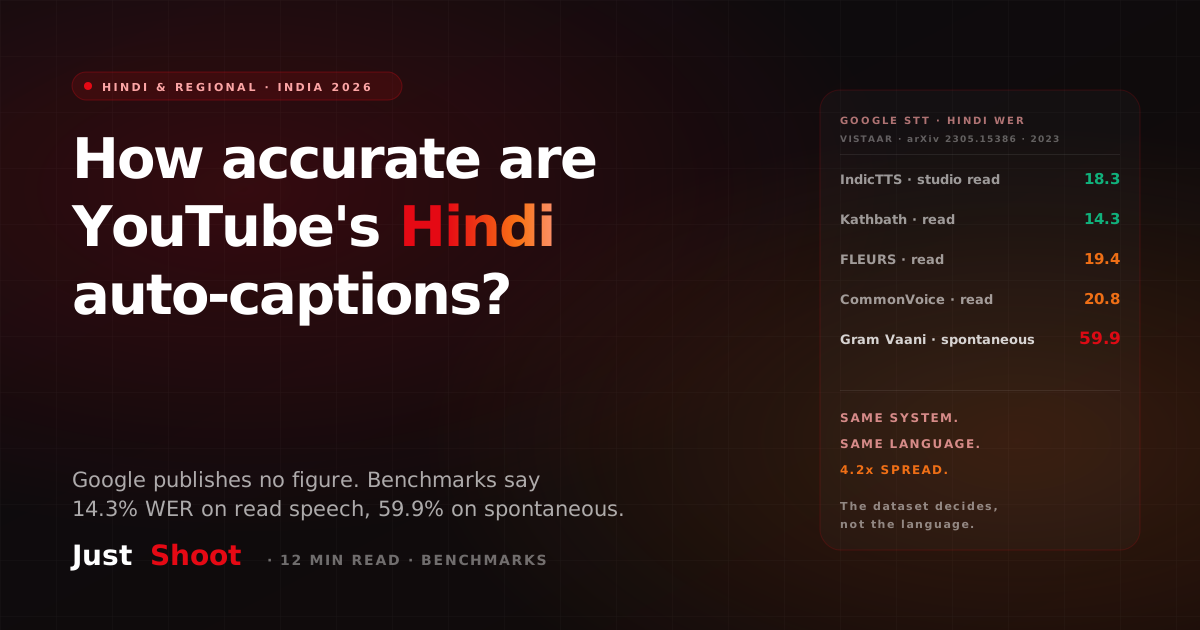
How Accurate Are YouTube's Auto-Captions in Hindi? (2026)
Google publishes no Hindi accuracy figure for YouTube captions. The nearest dated benchmarks put Hindi ASR between 14% and 60% word error rate, depending entirely on the dataset.