YouTube Burnout Isn't Effort — It's the Scripting Bottleneck (India 2026)
Most YouTube burnout in India isn't laziness — it's the scripting + packaging time per video. Here's the systemic workflow fix for weekly creators in 2026.
YouTube Burnout Isn't Effort — It's the Scripting Bottleneck (India 2026)
By Ashok Sachdev, Founder of JustShoot · Published 9 September 2026
A note before we start: this is workflow advice, not mental-health advice. If exhaustion is affecting your sleep, mood or health, please talk to a professional — no upload schedule is worth that.
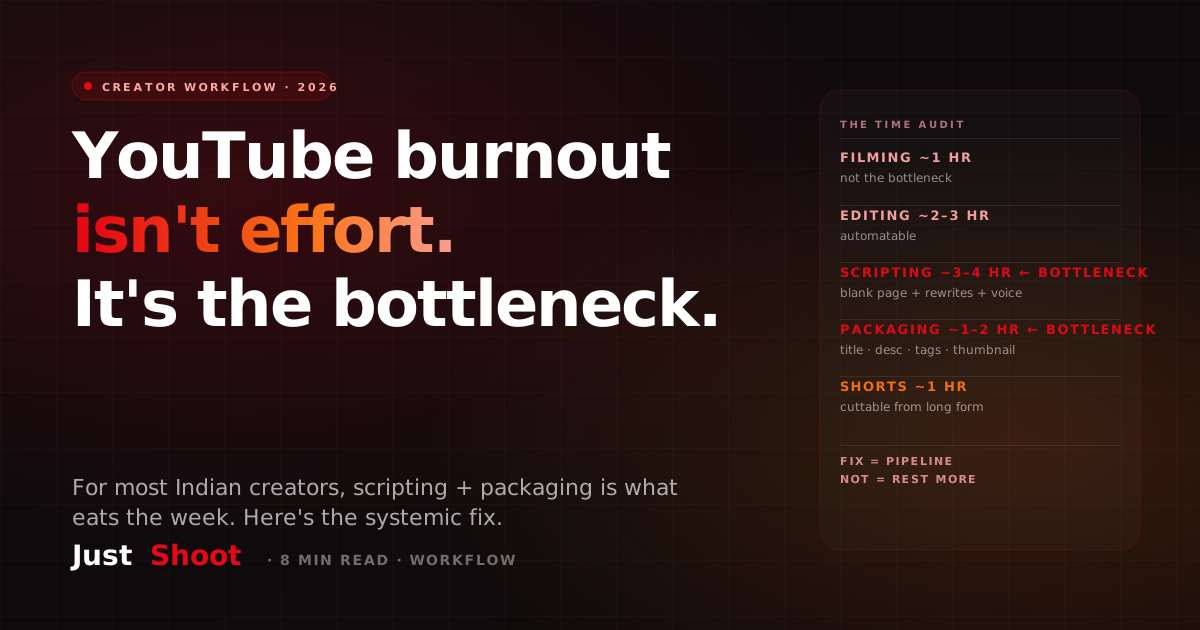
Short answer: YouTube creator burnout in 2026 isn't a willpower problem — it's a workflow problem. For most Indian creators publishing weekly, the bottleneck isn't filming or editing. It's the 6–10 hours of scripting, packaging (title, description, tags, thumbnail) and shorts-cutting that sits behind every upload. The fix isn't "rest more." It's a research → script-in-your-tone → SEO → shorts pipeline that cuts those 6–10 hours to 2–3 — without making your videos sound like everybody else's.
The real reason most YouTube creators burn out: the per-video time audit
Search "YouTube burnout" and the advice is identical everywhere: take breaks, batch your content, protect your weekends. It's kind advice. It's also incomplete, because it treats burnout as an energy problem when, for most working creators, it's an arithmetic problem.
Run the audit on your last upload. Not the romantic version — the honest one:
- Topic research: finding an angle with actual demand — 1–2 hours
- Scripting: outline, hook, drafts, rewrites — 3–4 hours
- Filming: the part everyone pictures — ~1 hour
- Editing: cuts, captions, B-roll — 2–3 hours
- Packaging: title, description, tags, thumbnail — 1–2 hours
- Shorts: cutting and captioning 2–3 clips — ~1 hour
That's 9–13 hours per long-form video, and creators we work with self-report numbers in exactly this range. (Creator-economy surveys keep finding the same pressure from the other end: ConvertKit's State of the Creator Economy research has repeatedly listed burnout and time scarcity among creators' top challenges, and Buffer's creator reports echo it. We're not inventing a percentage here — run your own audit; the hours speak.)
Now multiply by 52 weekly uploads, on top of a job or college, and "just rest more" starts to sound like telling someone with a leaking roof to mop faster.
Why filming and editing aren't the bottleneck (and what is)
Look at the audit again and something jumps out: the two tasks creators think of as "making a video" — filming and editing — are roughly a third of the total. Editing is also the most automatable hour in the stack: silence-cutting, auto-captions and rough cuts have been solved by AI editors for years.
What hasn't been solved by the average creator's stack is everything around the edit:
- Research has no end state — you can always scroll one more competitor video.
- Scripting is the highest-skill, highest-friction task: it's where the blank page lives, and where most procrastination actually happens.
- Packaging is five small decisions (title, thumbnail concept, description, tags, end screen) that each feel tiny and collectively eat an evening.
In other words: the bottleneck is the writing and thinking work, not the camera work. That's why batching film days — the standard burnout advice — helps less than expected. You batch the easy third and leave the hard two-thirds untouched. We did the deeper time-math on the scripting hours specifically in how long it really takes to write a YouTube script (and how AI changes it).
The 4 hidden tasks behind every "one video"
When a creator tells me "I make one video a week," what they actually make is:
- One script — researched, hooked, structured, in their voice.
- One package — title + thumbnail + description + tags that earn the click. (Half of growth advice, including our own channel-growth pillar, is really packaging advice.)
- Two to three Shorts — because the algorithm in 2026 rewards multi-format channels.
- One publishing decision — when to post, which we covered in the best time to upload in India.
Four deliverables, marketed to you as "one video." The earnings pressure makes it worse: when revenue is tied to consistency — and you can see what consistency is worth with the income calculator — skipping a week feels like burning money, so creators push through the 10-hour weeks until something gives. Consistency, not occasional virality, is what compounds; we made that case in views kaise badhaye.
The systemic fix: research → script-in-tone → SEO → shorts, as one pipeline
Here's what I'd actually set up — and what we built JustShoot's nine-agent pipeline to do, so I'll declare the bias and keep the logic tool-agnostic:
- Research on demand, not by doomscroll. One pass that returns 3–5 angles with evidence of demand. Timebox it: 30 minutes, then pick.
- Script in your tone, not from a blank page. This is the step where generic AI fails — fast drafts that sound like nobody. The fix is locking your voice signals (rhythm, Hinglish blend, hook style) once, so every draft starts 80% yours. That's the trade-off we dissected in why AI scripts sound robotic — and the fix: speed that costs your voice isn't speed, it's a rewrite tax.
- Packaging generated from the script, not invented separately at 11pm: title options, description, tags in one pass.
- Shorts cut from the long form, each with its own hook, instead of three separate ideation sessions.
The point isn't "use my tool." The point is that these four tasks share one input — the script — so doing them as one connected flow collapses the duplicated thinking. Creators running a pipeline like this report total desk time of 2–3 hours per upload instead of 6–10. Filming stays exactly as human as it ever was.
What a 2-hour weekly workflow actually looks like
A concrete template you can copy this week:
- Monday, 30 min: pick the topic from researched angles; lock the title + thumbnail concept first.
- Tuesday, 60 min: generate the tone-locked draft, then do one human pass — punch up the hook, add your stories, cut anything you wouldn't say. Start from a reusable script template for your format (talking-head, tutorial, story) so structure is never re-invented.
- Wednesday, film: ~1 hour, unchanged.
- Thursday, 30 min: approve the generated description/tags, schedule the upload, queue 2–3 Shorts.
Roughly two hours of desk work plus your filming hour. The week gets a floor under it — and the floor, not motivation, is what makes weekly publishing survivable for years.
When "rest more" is the wrong advice (and when it's right)
Be honest about which problem you have:
- If you're exhausted because every upload costs 10 desk-hours, rest is a painkiller — the workload returns Monday. Fix the system first.
- If you've fixed the system, you're at 2–3 hours per video, and you still dread it — that's not a workflow problem. That's a signal worth listening to, possibly with professional help. The World Health Organization classifies burnout as an occupational phenomenon (ICD-11, 2019) — a real pattern of workplace exhaustion, not a personal failing. Nothing in this post is a clinical claim or a substitute for that conversation.
The system fix exists so that the rest, when you take it, is actually rest — not anxiety about the backlog.
FAQ
Why am I burning out even though I love YouTube? Because most of the load is invisible: research, scripting, titles, descriptions, thumbnails and shorts-cutting compound behind every upload. The filming hour you love is the smallest slice. Audit your real hours per video — the number usually surprises creators.
How long should a YouTube video really take end-to-end? Creators we work with self-report 8–14 hours per long-form video across research, scripting, filming, editing and packaging. A connected AI pipeline brings the desk-work portion to 2–3 hours. The full breakdown is in our scripting time-math post.
Is batching the answer to creator burnout? Partially. Batching helps filming and editing, but those aren't the bottleneck — research, scripting and packaging are, and they don't batch well manually. A pipeline batches them automatically by generating script, SEO and shorts from one input.
Can AI scripting actually keep my voice? Yes — if it locks your tone signals first: sentence rhythm, Hindi-English blend, hook style, signature phrases. A generic prompt won't; a persisted Tone Fingerprint will. Speed that makes you sound generic just moves the work to rewriting.
What's the smallest first change I can make this week? Adopt one reusable script template for your main format — grab one free from the templates library. It removes the blank page, which is where most scripting hours die. Then graduate to a tone-locked pipeline when you're ready.
Start with the lowest-friction fix: pick a free script template for your format, or lock your voice once with the Tone Fingerprint so every future draft starts sounding like you.

How to Keep Your YouTube Channel Voice Consistent (India 2026)
Your YouTube channel sounds different in every video. Here's the 3-component system Indian creators use to lock voice consistency across 100+ scripts in 2026.
How to Check If Your YouTube Script Sounds AI-Generated (2026)
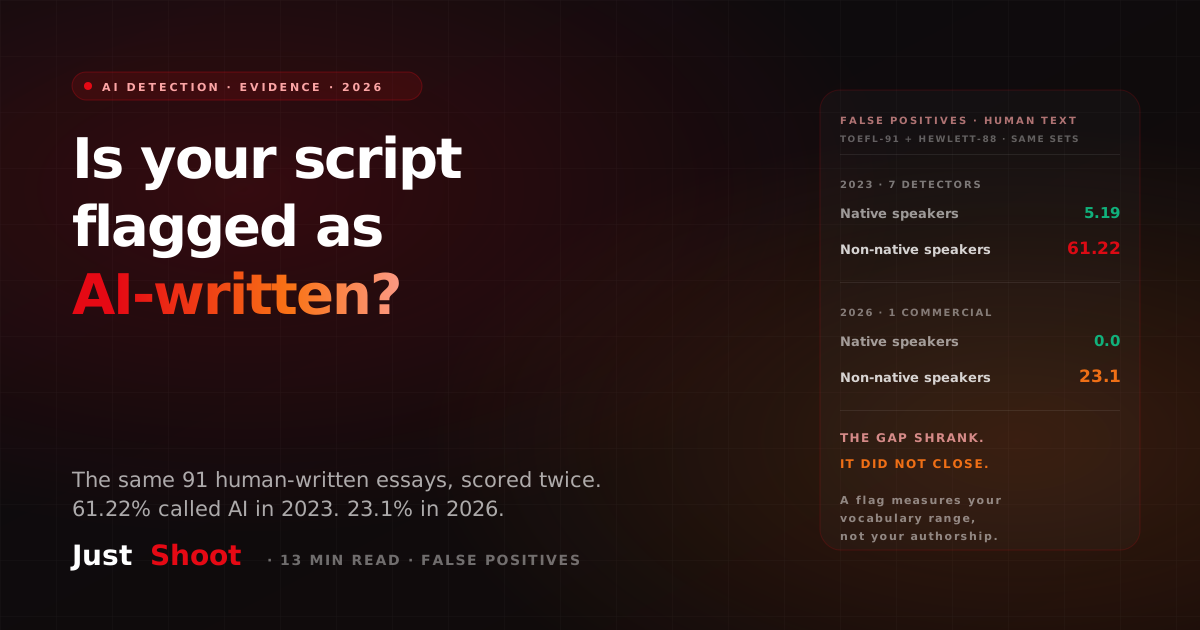
The same 91 human-written essays were scored by AI detectors twice: 61.22% were flagged as AI in 2023, 23.1% in 2026. Native-speaker essays scored 5.19% and 0.0%.
How Accurate Are YouTube's Auto-Captions in Hindi? (2026)
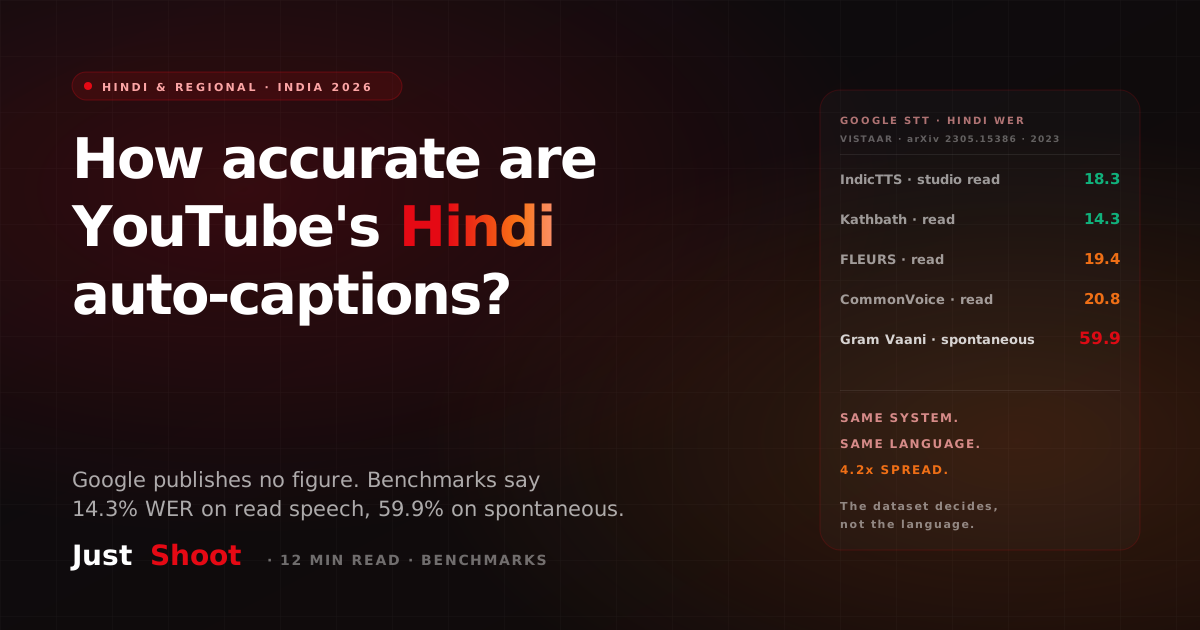
Google publishes no Hindi accuracy figure for YouTube captions. The nearest dated benchmarks put Hindi ASR between 14% and 60% word error rate, depending entirely on the dataset.