How to Write a Multi-Part YouTube Series Script That Binges (India, 2026)
Script a multi-part YouTube series so the whole playlist binges: cross-episode open loops, recaps that don't bore, a consistent cold-open formula, and the 'next in series' handoff. The continuity rules a standalone script doesn't need.
How to Write a Multi-Part YouTube Series Script That Binges (India, 2026)
By Ashok Sachdev, Founder of JustShoot · Published 2026-07-01
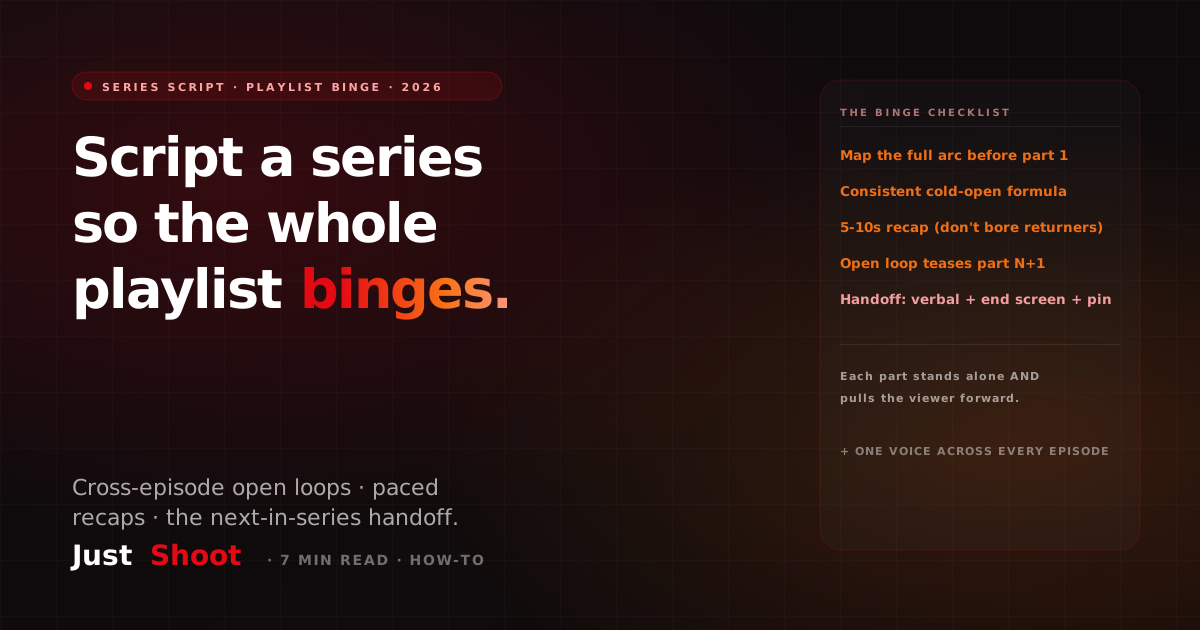
Short answer: A series script is not just several standalone scripts back to back — it carries an arc and continuity that a one-off video never needs. The four things that make a playlist binge: (1) cross-episode open loops — tease what's coming in part N+1 inside part N's close, (2) a fast recap that doesn't bore returning viewers, (3) a consistent cold-open formula so every episode feels like the same show, and (4) a clear "next in series" handoff — a verbal cue plus an end screen plus a pinned comment pointing to the next part. Write each episode to stand alone and pull the viewer forward, and the playlist watches itself.
I build an AI scripting tool for Indian creators, and series are where I see the most wasted potential. Creators make a great "Part 1," it does well, and then Part 2 just… starts, with no thread back to Part 1 and no pull toward Part 3. The audience that loved Part 1 never finds out Part 2 exists, or bounces because the episode doesn't feel connected. A series that's scripted as a series keeps viewers in a session — and session watch-time is gold for the algorithm. Here's how to script the whole arc.
Why a series script is different from a standalone script
A standalone script has one job: hook, deliver, close. A series script has two extra jobs layered on top — maintain continuity backward and create pull forward.
- Continuity backward: a returning viewer should feel the thread. Callbacks to earlier parts, consistent terminology, a recap that respects what they already know.
- Pull forward: every episode should plant a reason to watch the next one before it ends, so the playlist auto-advance lands on a viewer who's already curious.
This is structurally different from the single-video order-of-decisions writing process, which optimizes one video in isolation. With a series, you're writing the connective tissue between videos as deliberately as the videos themselves.
How to script a multi-part series
Step 1 — Map the whole arc before you write episode 1
Decide the full span first: how many parts, what each part delivers, and what the cumulative payoff is. A 4-part series on "growing a channel from 0 to 1,000 subs" might be: Part 1 niche + setup, Part 2 first 10 videos, Part 3 the first viral attempt, Part 4 the analytics review. Each part is useful alone, but the arc — zero to a thousand — is the binge magnet. Write the one-line promise of every part on a single page before scripting any of them. This prevents Part 3 from repeating Part 1 or contradicting Part 2.
Step 2 — Lock a consistent cold-open formula
Every episode should open the same shape so the series feels like one show, not a folder of unrelated videos. Pick a cold-open formula and reuse it: e.g. one-line series tag → the specific promise of THIS part → a 5-second recap of where we left off. Consistency here is what makes a viewer recognize "oh, this is the same series" within three seconds — which is exactly when they decide to stay.
Step 3 — Write the recap so it doesn't bore returners
The recap is the trap that kills series retention. New viewers need context; returning viewers will leave if you re-explain everything. The fix is a 5-10 second compressed recap framed as momentum, not repetition: "Last part we picked the niche and shot the first three videos — now we publish." That orients a newcomer and signals to a returner that you're moving forward, not stalling. Never spend 90 seconds recapping a 7-minute episode.
Step 4 — Plant the cross-episode open loop in the close
This is the highest-leverage line in the whole series. Before the episode ends — not after the outro — tease the next part with a specific, curiosity-shaped promise: "Next part, I'll show you the exact title that got this video 40,000 views — and why my first three titles flopped." A vague "see you next time" plants nothing. A specific open loop makes auto-advance land on a viewer who already wants the answer. The open loop should connect to the cumulative arc, not just be a random teaser.
Step 5 — Build the "next in series" handoff
The tease is verbal; the handoff is structural. Three pieces, every episode:
- Verbal cue in the close pointing to the next part (the open loop above).
- End screen linking the next video directly, so auto-advance is one tap.
- Pinned comment with the playlist link or a "Part 3 is here →" line, which also catches viewers who arrive at the episode out of order.
Put all three on every episode except the finale. The finale gets a different close — point back to Part 1 or to a related playlist so the session continues.
The continuity checklist for a series
Before you publish any part, check it against the series, not just itself:
- Does the cold-open match the series formula?
- Does the recap orient newcomers in under 10 seconds without boring returners?
- Is there a specific open loop teasing the next part, placed before the outro?
- Are the end screen and pinned comment pointing to the right next video?
- Is terminology consistent with earlier parts (same names for the same concepts)?
- Does the voice sound like the rest of the series — same hook style, same Hinglish blend?
That last point is where most series quietly fall apart: Part 1 and Part 4 sound like different creators because they were written weeks apart in different moods. Keeping a consistent channel voice across a long series is a system problem, not a willpower problem.
Where JustShoot fits
A series is exactly where writing in a consistent, locked voice stops being a nice-to-have and becomes the difference between a playlist that binges and one that feels stitched together. Inside JustShoot's 9-agent pipeline, the script agent holds your channel voice in one Tone Fingerprint across every episode — so Part 7 opens with the same energy, the same hook formula, and the same Hinglish blend as Part 1, even if you script them a month apart. You set the arc; the connective tissue — consistent cold-opens, paced recaps, the open-loop close — stays coherent because the voice and structure don't drift between episodes.
JustShoot starts at Trial ₹0 (7 days, 2 scripts, no card), then Starter ₹499/mo (3 scripts), Creator ₹999/mo (7 scripts, most popular), Pro ₹1999/mo (15 scripts), and Studio is custom. Every plan runs the full pipeline.
Writing a series and want to make sure every episode still sounds like you and not like a different writer each time? Lock your voice first with the JustShoot Tone Fingerprint tool — free, about a minute.
FAQ
How is a YouTube series script different from a normal script? A standalone script just hooks, delivers, and closes one video. A series script adds two layers on top: continuity backward (callbacks and a quick recap so returning viewers feel the thread) and pull forward (a cross-episode open loop that teases the next part before the episode ends). You're scripting the connective tissue between videos as deliberately as the videos themselves, so the whole playlist binges as a session.
How do you write a recap that doesn't bore returning viewers? Keep it to 5-10 seconds and frame it as momentum, not repetition: "Last part we picked the niche and shot three videos — now we publish." That's enough to orient a newcomer while signalling to a returner that you're moving forward. Never spend 60-90 seconds re-explaining a previous episode; that's the single biggest cause of series drop-off.
What is a cross-episode open loop? It's a specific, curiosity-shaped promise about the next part, planted in the close of the current part before the outro — for example, "Next part I'll show you the exact title that got 40,000 views and why my first three flopped." It makes YouTube's auto-advance land on a viewer who already wants the answer, which is what keeps a playlist binging instead of stopping after one video.
How do I get viewers to watch the next video in my series? Use a three-part handoff on every episode except the finale: a verbal open loop in the close, an end screen linking the next video directly, and a pinned comment pointing to the next part or the full playlist. The verbal tease creates the desire; the end screen and pinned comment make acting on it one tap, including for viewers who arrive out of order.
How do I keep my voice consistent across a long series? Lock a cold-open formula and a defined channel voice — hook style, rhythm, Hinglish blend — and apply them to every episode, rather than writing each part from a blank page in whatever mood you're in. Drift between Part 1 and Part 8 is what makes a series feel stitched together. A persisted tone profile (rather than re-deciding your style each episode) keeps the whole arc sounding like one creator.
Ashok Sachdev is the founder of JustShoot, an AI content OS that writes YouTube scripts in your own voice for Indian creators. Connect on LinkedIn.
The Most-Subscribed YouTube Channels in India — and What They Have in Common (2026)
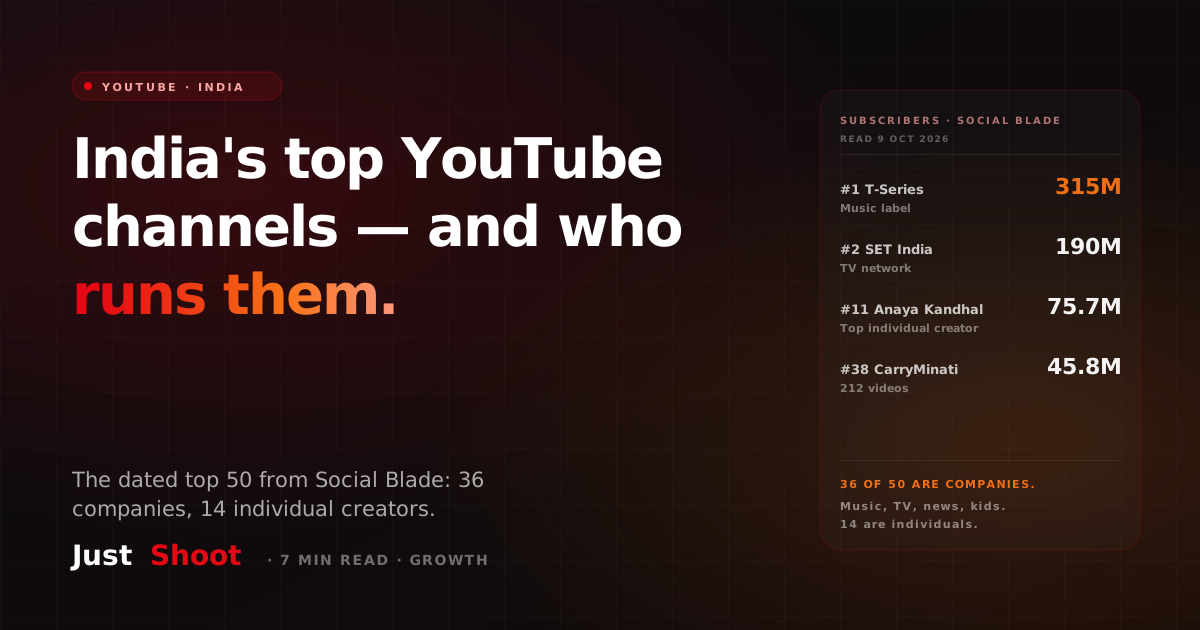
T-Series leads India's YouTube with 315 million subscribers. Of the top 50 channels, 36 belong to music labels, TV networks, news and kids' brands. Only 14 are individual creators.
How Many Indians Watch Game Streams? (2026)
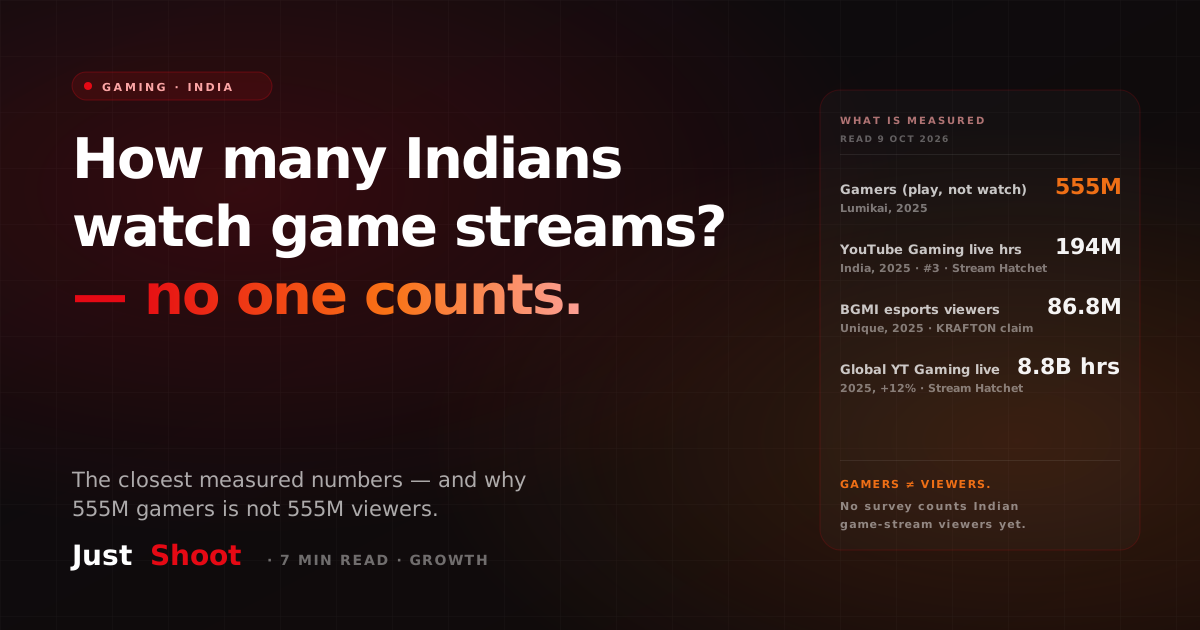
India has 555 million gamers, but nobody publishes how many watch game streams. Here are the closest measured numbers — hours watched, esports viewers — and what they count.
How Much Mobile Data Does an Indian Use Each Month — and How Much Is Video (2026)
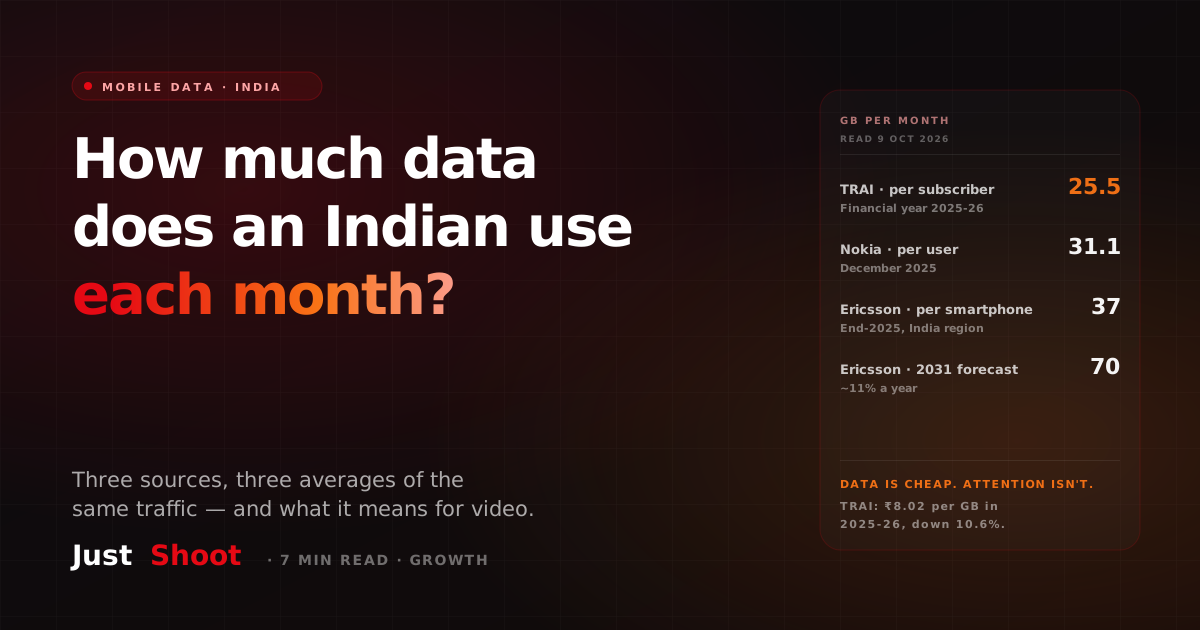
TRAI says 25.5 GB, Nokia says 31.1 GB, Ericsson says 37 GB. Why three official-looking numbers differ, and what India's data habit means for video creators.