How Big Are Micro-Drama Apps in India? Users, Revenue and What Creators Should Know (2026)
Lumikai counts 100 million monthly users and a $300 million first year. Redseer counts 15–17 million monthly payers. What each micro-drama number measures, and what the format means for creators.
How Big Are Micro-Drama Apps in India? Users, Revenue and What Creators Should Know (2026)
By Ashok Sachdev, Founder of JustShoot · Published 10 October 2026 · Sources read 10 October 2026
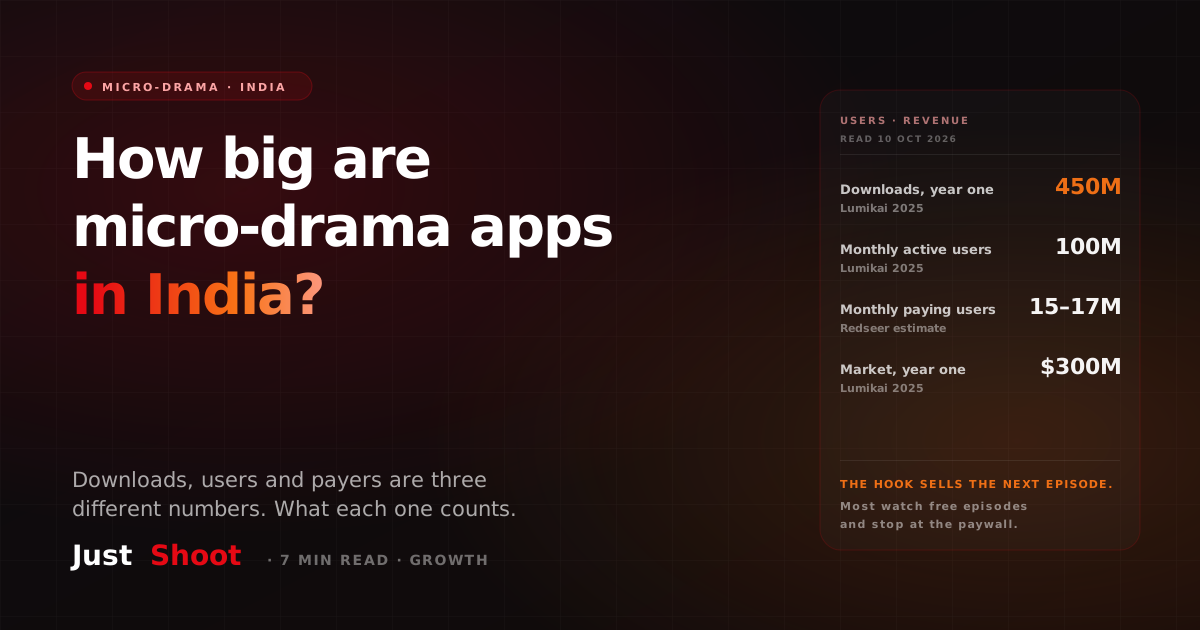
Short answer: Micro-drama apps — vertical, serialised dramas in episodes of a minute or two — reached about 100 million monthly active users and 450 million downloads in India in their first year, according to Lumikai, which sized the market at $300 million in that year. Redseer puts the addressable audience at 250–280 million, but only 15–17 million paying users a month, and about 40 million who have paid at least once. App companies' own figures are larger still: Kuku TV says it has 170 million+ downloads.
The gap between 100 million users and 15–17 million monthly payers is the story. Most viewers watch the free episodes and stop at the paywall.
The numbers side by side
| Figure | What it measures | Source |
|---|---|---|
| 450 million | Micro-drama app downloads in India, first year | Lumikai, State of India's Interactive Media Report 2025 |
| 100 million | Monthly active users, first year | Same |
| $300 million | Market size in its first year (Lumikai does not say in the coverage whether this is revenue or gross spend) | Same |
| $4.5 billion | Lumikai's projection for 2030 | Same |
| 250–280 million | Addressable audience | Redseer Strategy Consultants, micro-drama AVOD report |
| 15–17 million | Average monthly paying users | Same |
| ~40 million | Users who have paid at least once | Same |
| ~50 minutes | Time a user spends per day, with repeated app opens | Same |
| ₹24 crore → ₹5,000–5,500 crore | Advertising revenue, FY26 → FY32 (projection) | Same |
| 170 million+ | Kuku TV downloads (company claim) | Kuku TV, February 2026 |
Downloads, users and payers are different things
Downloads count installs, including people who installed once and left. Monthly active users count people who opened the app in a month. Paying users count people who bought coins or a subscription. Each number is much smaller than the one before it:
- 450 million downloads → 100 million monthly users (Lumikai)
- 250–280 million reachable people → 40 million who ever paid → 15–17 million paying in a typical month (Redseer)
The two firms use different bases, so these chains should not be joined into one funnel. But both say the same thing: the audience is large, and the paying audience is a small fraction of it.
How micro-drama apps make money
Micro-drama apps typically show the first episodes free and then charge — with coins per episode or a weekly or monthly pass — to unlock the rest. That model depends on cliffhangers that make people pay to see what happens next.
Redseer's report argues that the next phase is advertising: free, ad-supported viewing, with ad revenue projected to grow from about ₹24 crore in FY26 to ₹5,000–5,500 crore by FY32, and ad-supported daily users growing about eight times to 140–150 million. These are projections, not results.
What the apps say about themselves
Kuku TV, the most visible Indian app, says it has more than 170 million downloads and more than 100,000 micro-drama episodes in six or more languages, and was named "Best New Short Drama App" at the Sensor Tower APAC Awards 2025. Coverage of the FICCI–EY media report has placed Kuku TV, Story TV and Quick TV among India's five most-downloaded video streaming apps, ahead of several established OTT services by installs.
These figures come from the companies or from coverage of them. Downloads say how many people tried an app, not how many still use it.
How it compares with Reels and Shorts
Micro-dramas compete for the same phone minutes as Reels, Shorts and Moj, but at a much smaller scale. YouTube and Instagram each reach close to half a billion people in India by ad reach. For those numbers and what they measure, see how many Indians use short-video apps.
The difference is the format. A Reel or Short is one self-contained video. A micro-drama is a series, built so each episode ends on a hook that makes you need the next one.
What this means for a YouTube creator in India
Borrow the cliffhanger, not the format. You do not need to make dramas. What micro-dramas prove is that Indian viewers will keep swiping through a series when every episode ends on an open question. Multi-part Shorts and series-style long videos use the same mechanic.
Every episode needs its own hook. In a micro-drama, the first two seconds of each episode decide whether the viewer stays, exactly as on Shorts. Test your openings with the free hook generator, which writes three hooks in Hindi, Hinglish or English. For turning one long video into a series of short clips, see repurposing a YouTube video into Shorts and Reels.
Regional language works. The apps publish in many Indian languages, and Kuku TV says it covers six or more. For choosing your own language, see which Indian language to start a YouTube channel in.
How to quote these numbers
- "100 million monthly active users in the first year (Lumikai, 2025)" — not "100 million paying users".
- "15–17 million monthly paying users (Redseer)" — say it is an estimate.
- Label download counts from apps as company claims, with the date.
Where JustShoot fits
A series lives or dies on its hooks and its structure. JustShoot runs the pre-production pipeline — research and fact-check, script, storyboard, thumbnail brief, SEO package and shorts — in your channel's own voice, in 11 languages. The shorts step turns one long script into a set of short scripts, each with its own hook.
Pricing is per script: Trial ₹0 (7 days, 2 scripts lifetime, no card) · Starter ₹499/mo (3 scripts) · Creator ₹999/mo (7 scripts, most popular) · Pro ₹1999/mo (15 scripts) · Studio custom. No rollover, GST included, monthly only. Details on the pricing page.
FAQ
How many people use micro-drama apps in India? Lumikai reports about 100 million monthly active users in micro-drama apps' first year in India, from 450 million downloads. Redseer estimates an addressable audience of 250–280 million.
How many people pay for micro-drama apps in India? Redseer estimates 15–17 million average monthly paying users, and about 40 million who have paid at least once.
How big is the micro-drama market in India? Lumikai sized it at $300 million in its first year and projects $4.5 billion by 2030. Redseer projects advertising revenue growing from about ₹24 crore in FY26 to ₹5,000–5,500 crore by FY32.
Which is the biggest micro-drama app in India? Kuku TV is the most widely reported; it says it has more than 170 million downloads. Coverage of the FICCI–EY report has placed Kuku TV, Story TV and Quick TV among India's top five most-downloaded video streaming apps. Download figures are company or app-store measures, not active users.
How long do people watch micro-dramas? Redseer reports users spend about 50 minutes a day on micro-drama apps, with repeated app opens.
Sources, read 10 October 2026. Lumikai, State of India's Interactive Media Report 2025, as reported by afaqs (India's micro-drama segment crosses $300Mn in year one). Redseer Strategy Consultants, India's Micro-Drama Market: 8x AVOD Growth by FY32 (redseer.com). Kuku TV, Sensor Tower APAC Awards announcement (February 2026). FICCI–EY download ranking as reported by exchange4media.
How Many Indians Use Short-Video Apps? Reels, Shorts, Moj and Josh (2026)
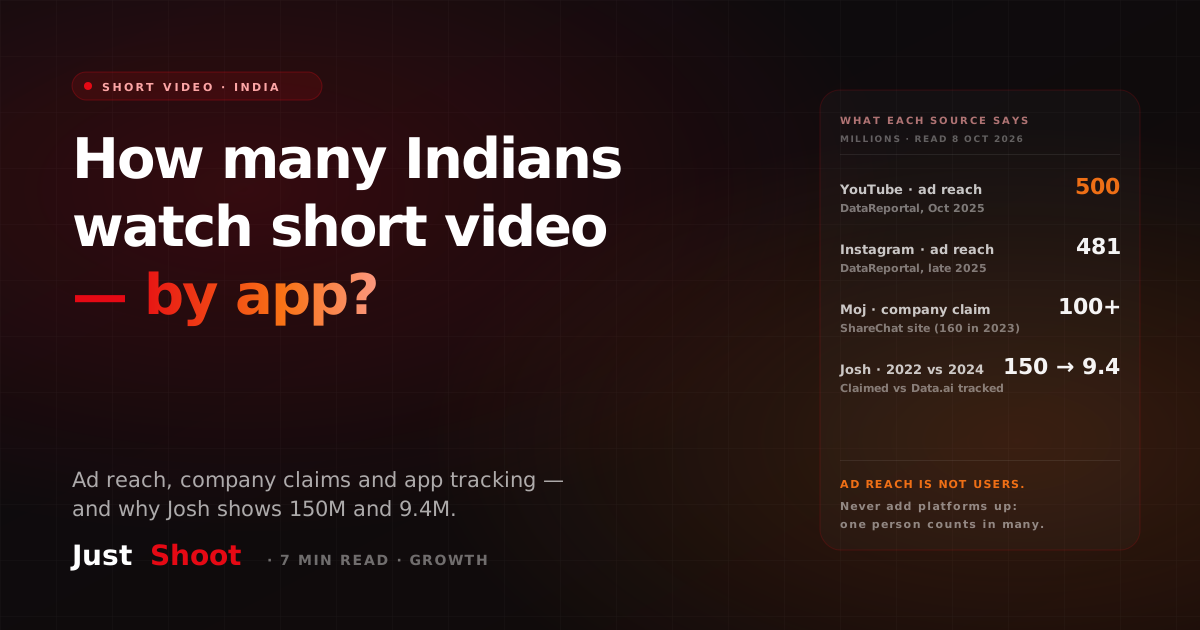
Instagram, YouTube, Moj and Josh each count users differently, and the company claims and independent counts disagree, sometimes by more than ten times.
How Much Does YouTube Earn in India? What Google's Filings Show (2026)
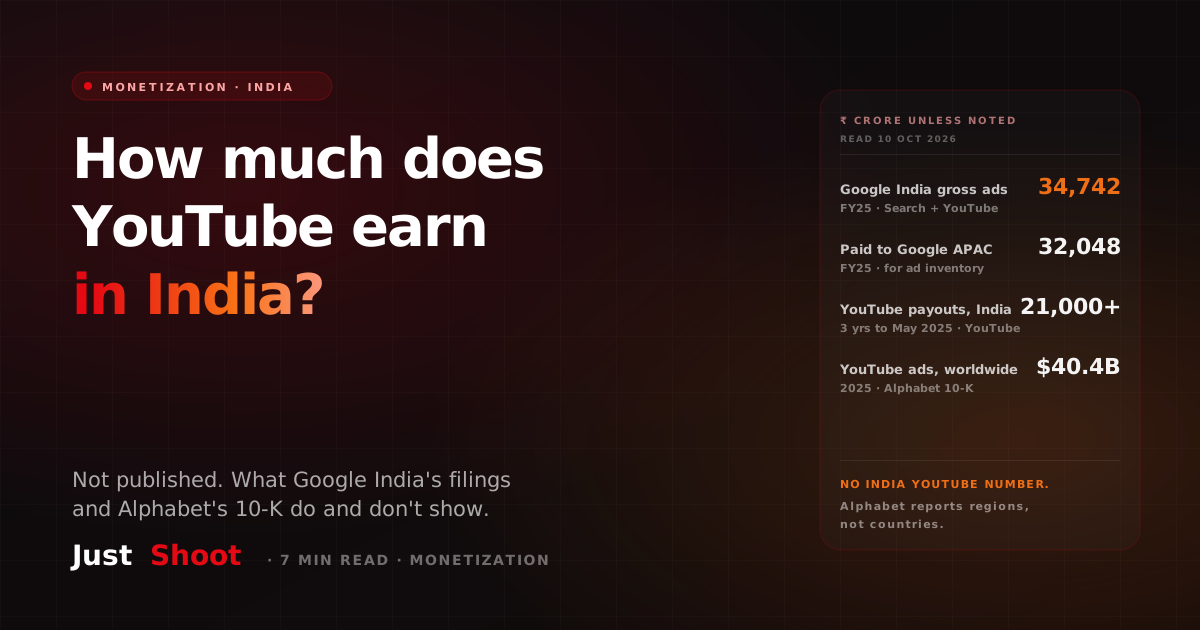
YouTube does not report its India revenue. Google India's filings show ₹34,742 crore of gross ad revenue for FY25, and YouTube says it paid Indian creators ₹21,000 crore in three years.
The Most-Subscribed YouTube Channels in India — and What They Have in Common (2026)
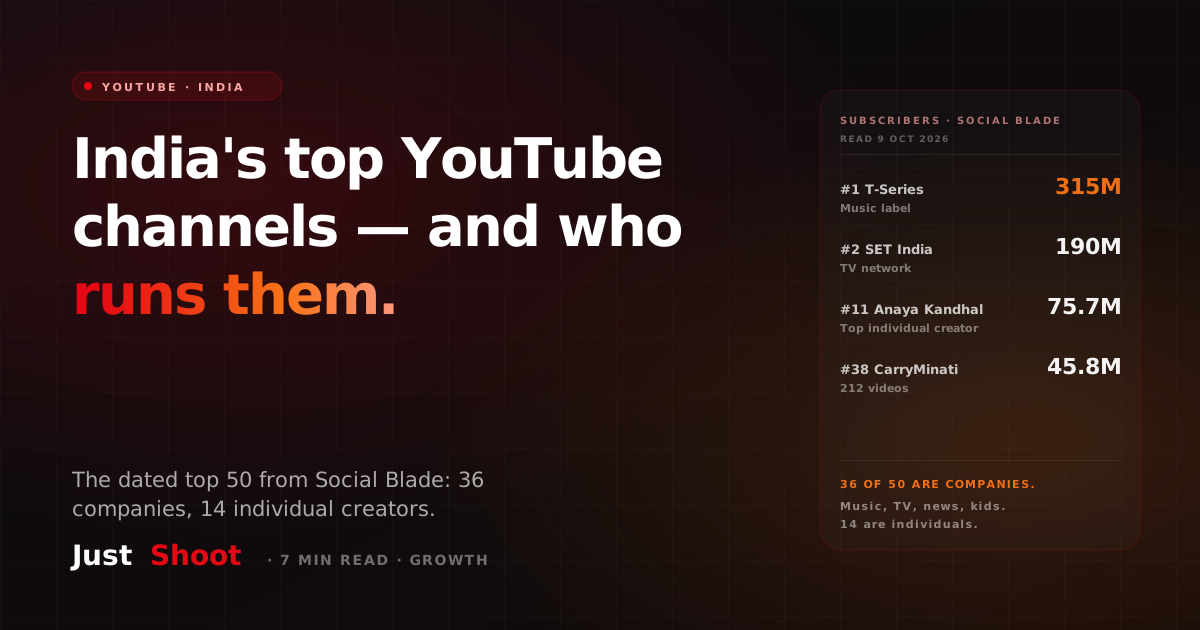
T-Series leads India's YouTube with 315 million subscribers. Of the top 50 channels, 36 belong to music labels, TV networks, news and kids' brands. Only 14 are individual creators.