What YouTube Video Editors Charge in India (2026)
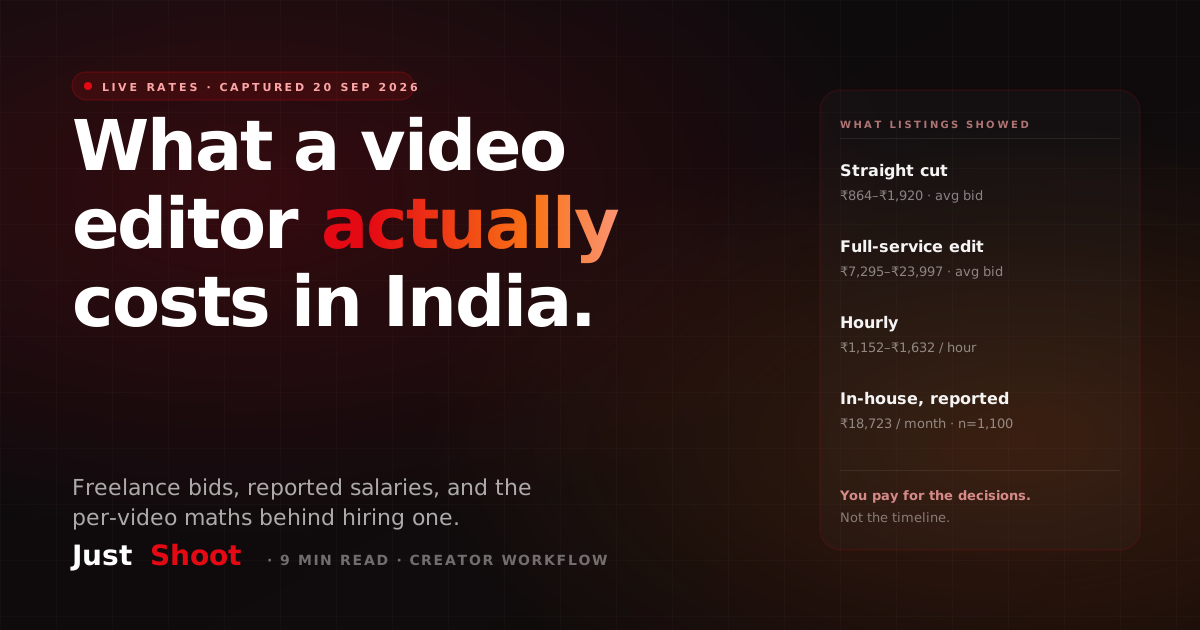
Real rates from listings live on 20 September 2026 — freelance per-video bids, hourly rates, in-house salaries, and when to stop freelancing.
What YouTube Video Editors Charge in India (2026)
By Ashok Sachdev, Founder of JustShoot · Published 20 September 2026
Short answer: Freelance YouTube editing in India is bid in two separate bands — roughly ₹860–₹1,950 per video for a straight cut, and ₹7,300–₹24,000 per video for full-service editing. Hourly bids sit at ₹1,150–₹1,650. An in-house editor is advertised at ₹2.0–5.4 lakh a year. The gap is about who decides what gets cut.
Every figure below came from listings that were live on 20 September 2026. Here is where each one came from, what the fee does and does not cover, and the arithmetic that tells you when freelancing stops being the cheaper option.
What live freelance listings actually showed
These are average bids on Freelancer.in's video-editing category — each card is labelled "Avg Bid", meaning what freelancers offered on that job, not what the client finally paid. There were 648 open video-editing projects on the board that day. I have pulled out only the YouTube-specific rows.
| Job as posted | Average bid |
|---|---|
| Budget-friendly cartoon YouTube video | ₹864 |
| Professional YouTube video editing | ₹960 |
| YouTube video editor (long-form) | ₹1,344 |
| YouTube gaming Shorts editing | ₹1,920 |
| Comedic Shorts parody animation | ₹2,112 |
| Physics Reels for YouTube | ₹7,295 |
| Full-service YouTube editing (faceless) | ₹11,039 |
| Ongoing brand + AI content editor (retainer) | ₹21,021 |
| Educational long-form series completion | ₹23,997–₹71,991 |
Two hourly jobs on the same page were bid at ₹1,152 and ₹1,632 per hour.
Notice what the table is not: a smooth curve. There is almost nothing bid between ₹2,112 and ₹7,295. That hole is the most useful thing on this page, and I will come back to it.
One more number worth recording, because it says where the work is going: of the fifty video-editing jobs live on that page, roughly half were short-form — Reels, Shorts or TikTok — against a handful of long-form YouTube briefs. Demand has moved vertical faster than most rate guides have.
What the in-house route costs
Four sources, same day, India-wide. They do not fully agree, and the disagreement is informative.
Advertised roles on Internshala's video-editing job board:
- Junior / associate video editor — ₹2,00,000 to ₹3,90,000 per year, roughly ₹16,700–₹32,500 a month. Most ask for one year of experience; several take freshers.
- Senior video editor — ₹3,10,000 to ₹5,40,000 per year, about ₹25,800–₹45,000 a month. The top of that band was a Noida agency role at ₹4.8–5.4 lakh.
- Work-from-home video editor — one listing at ₹2,40,000 to ₹6,00,000, open to freshers, which shows how wide the "depends on the showreel" spread really is.
Reported salaries, which is a different thing from advertised ones:
- Indeed India puts the average at ₹18,723 a month, typical range ₹10,015–₹35,005, from 1,100 reported salaries. City-wise it lists Mumbai at ₹66,801, Bengaluru ₹33,971, Noida ₹25,749, Delhi ₹21,723 — the metro premium is real and large.
- Talent.com reports an average of ₹2,40,000 a year from 4,165 salaries.
- PayScale reports ₹4,38,509 a year from 364 profiles, with a 10th-to-90th spread of ₹1,80,000 to ₹9,57,000.
Talent.com and PayScale disagree by roughly 1.8x, and I am not going to average them into a fake precision. The likely reason is sample shape: Talent.com's 4,165 entries pull in the long tail of small-city and junior roles, while PayScale's 364 self-reported profiles skew senior and urban. Read them as the floor and the ceiling of the same market. The advertised Internshala ranges sit between the two, which is roughly what you would expect.
Interns are a separate line again: Internshala had 630 live video-editing internships that day, with named-company stipends from ₹5,000 (Reducate.ai, work-from-home) to ₹17,000–₹19,000 (The Nosh House, Bangalore) a month. Plenty of channels start here. It is legitimate, and it is also the route with the highest turnover.
Do not blend any of these with the freelance bids. They are a different purchase. A salaried editor learns where your jokes land, which B-roll you actually have, and how long your audience tolerates a setup. A freelancer delivers a file.
The ₹2,000-to-₹7,000 hole
Five times the price for the same runtime is not a skill premium. It is a scope change.
The ₹864–₹1,920 band is execution. You send footage and, usually, a rough idea of the cuts. The editor trims, syncs, colour-corrects, adds the captions and returns it. Decisions stay with you. At these rates nobody is watching your last ten videos to learn your pacing.
The ₹7,295–₹23,997 band is ownership. The editor decides what gets cut — which is to say, they are doing a second pass of your edit decisions, not just your timeline. Pattern interrupts, where the retention dip is likely to fall, whether the middle survives at all. The ₹11,039 faceless-channel listing is the clean example: no presenter to carry the video, so the edit is the video.
The hourly bids confirm the split. At ₹1,150–₹1,650 an hour, a full-service ten-minute edit at four to eight hours lands between roughly ₹4,600 and ₹13,000 — which is exactly the upper band. A ₹960 job, priced at the same hourly rate, buys well under an hour of attention. Both are honest prices. They are prices for different work, and most disappointing editor hires are someone buying the first and expecting the second.
An independent check agrees. The Indian freelance rate card published by That's My Brief — a marketplace's own published rates for H1 2026, not a survey, so treat it as one view rather than evidence — bands per-video editing as ₹2,000–₹8,000 for a junior editor (0–2 years), ₹8,000–₹30,000 for mid-level (2–5 years) and ₹30,000–₹1,00,000 for senior (5+), with monthly retainers at ₹15,000–₹28,000, ₹30,000–₹58,000 and ₹65,000–₹1,30,000 respectively. It also adds 10–20% for Mumbai and Bangalore. Different source, different method, same two-step shape — and the same conclusion that the number tracks seniority of judgement rather than minutes of runtime.
When freelancing stops being cheaper
Take a channel publishing four long-form videos a month.
Full-service freelance: 4 × ₹11,039 = ₹44,156 a month.
In-house: ₹16,700–₹32,500 a month at advertised junior rates, or ₹18,723 at Indeed's reported national average — for roughly twenty working days. Four videos is nowhere near twenty days of work, so thumbnails, Shorts cut-downs and re-edits come inside that number rather than on top of it.
The crossover is brutally early. At Indeed's ₹18,723 a month against ₹11,039 per full-service video, in-house wins at under two videos a month. Even at the top of the advertised junior band, ₹32,500, it wins at three. For script writing the equivalent crossover sits near seven or eight videos — editing flips far sooner because editing is the job that scales with volume rather than with ideas.
The catch is that those salary figures are national averages, and the metro numbers are not. Indeed's Mumbai average is ₹66,801 a month. In Mumbai the crossover moves out to about six videos, and freelancing stays sensible for much longer. Where you hire matters as much as how often you publish.
The cheap band is the exception that proves it. At ₹1,344 a video, freelancing stays cheaper at any volume you are likely to hit. But you are then buying a cut, and you are still the one deciding what the video is.
If you publish twice a month, none of these numbers are comfortable against what two videos are likely to earn. That is the honest read, and it is where most channels actually are. The YouTube income calculator will give you the other side of that sum in about a minute.
What the edit fee does not include
Almost every quote in that table covers the timeline and nothing else. Budget separately for:
- The script. Editing cannot rescue a video that had no argument. Script rates are a separate market entirely — what script writers charge in India has the live numbers, and the two costs stack.
- The thumbnail. Sometimes bundled in a retainer, almost never in a per-video fee. Ask explicitly.
- Title, description and tags. Not an editor's job, and asking for it free is how retainers quietly sour.
- Footage. Nobody in that table is shooting anything.
- Revisions past the agreed rounds. Unstated, this is where an ₹11,000 edit becomes ₹15,000.
A useful rule: the further up the price band you go, the more of this list is already inside the fee — which is part of why the upper band is less expensive than it first looks.
How to brief so the quote is fair
Editors bid high and vague when the brief is vague. Send five things:
- Runtime and format. "Ten-minute talking-head with B-roll" prices nothing like "60-second Short".
- Footage volume. Ninety minutes of raw for a ten-minute cut is a different job from twenty. This is the single biggest driver of hours.
- Who decides the cuts. Say plainly whether you are sending a cut list or buying judgement. This is the ₹2,000-to-₹7,000 question.
- Two videos whose edit you want. Links, not adjectives. "Snappy" is not a spec.
- Revision rounds and turnaround. Both belong in the quote, not in the argument afterwards.
Where the tool fits, honestly
An editor is worth paying for. What they cannot do is write the thing.
JustShoot runs the pre-production half — research, script, fact-check, hook, thumbnail brief, SEO package — in your channel's voice, so what reaches the editor is a script with a structure rather than forty minutes of rambling to rescue in post. That directly moves the number above: less raw footage per finished minute is fewer billable hours, whichever band you hire in.
Pricing is monthly and counted in scripts: Trial ₹0 (7 days, 2 scripts, no card), Starter ₹499 (3 scripts), Creator ₹999 (7 scripts), Pro ₹1999 (15 scripts), Studio custom. GST-inclusive, no rollover.
It does not replace an editor and it is not sold as one. If you want to check whether the scripts you are already handing over read like a person wrote them, run one through the free AI Script Robot Score — no signup — and if you are weighing tool spend against freelance spend, the cost breakdown for AI script tools in India does that comparison properly.
FAQ
How much does a YouTube video editor charge per video in India? On 20 September 2026, freelance bids split into two bands: ₹864–₹1,920 for a straight cut and ₹7,295–₹23,997 for full-service editing where the editor owns the cut decisions. Hourly bids were ₹1,152–₹1,632.
What is a fair rate for editing a YouTube Short? Shorts-specific bids that day ran ₹1,920–₹2,112 for one-off gaming and animation briefs. Ongoing short-form retainers were bid far higher — one brand Reels-and-Shorts retainer averaged ₹21,021 — because they buy volume and availability, not one file.
Should I hire a freelance editor or a full-time one in India? Count your monthly long-form videos. Against full-service freelance at around ₹11,000 a video, an in-house editor at Indeed's reported ₹18,723 a month is cheaper from under two videos onward, and from about three at the top of the advertised junior band. In Mumbai, where the reported average is ₹66,801, the crossover moves out to roughly six. If you only need cuts executed rather than decided, freelance stays cheaper at any volume.
What does a video editor earn in India? Advertised roles on 20 September 2026 ran ₹2.0–3.9 lakh a year for junior and associate editors and ₹3.1–5.4 lakh for senior ones. Reported salaries the same day: Indeed India, ₹18,723 a month on 1,100 reports; Talent.com, ₹2.4 lakh a year on 4,165; PayScale, ₹4.39 lakh on 364. The last two disagree by 1.8x, so treat them as a floor and a ceiling rather than one number.
Why do some editors quote ₹900 and others ₹11,000? Scope, not skill. The cheap quote executes your cut list. The expensive one makes the cut decisions — pacing, what gets dropped, where retention breaks — and usually absorbs revisions. Ask which you are buying before you compare the two numbers.
Sources, all captured 20 September 2026: Freelancer.in video-editing category (648 open projects; figures are the "Avg Bid" shown on each card — what freelancers offered, not confirmed contract values); Internshala video-editing job board and internship board (advertised ranges, not verified payroll; 630 live internships); Indeed India video-editor salary page (1,100 reported salaries, page last updated 25 May 2026); Talent.com India (4,165 salaries); PayScale India Film/Video Editor (364 profiles, page last updated 11 July 2026); That's My Brief India freelance rate card (marketplace's own published H1 2026 rates, no sample size disclosed — cited as one view, not a survey). Bids, advertised salaries, reported salaries, stipends and listed asks are kept separate throughout and are never averaged together. AmbitionBox, Glassdoor India, Fiverr and Upwork all blocked automated access on the day and contributed nothing.
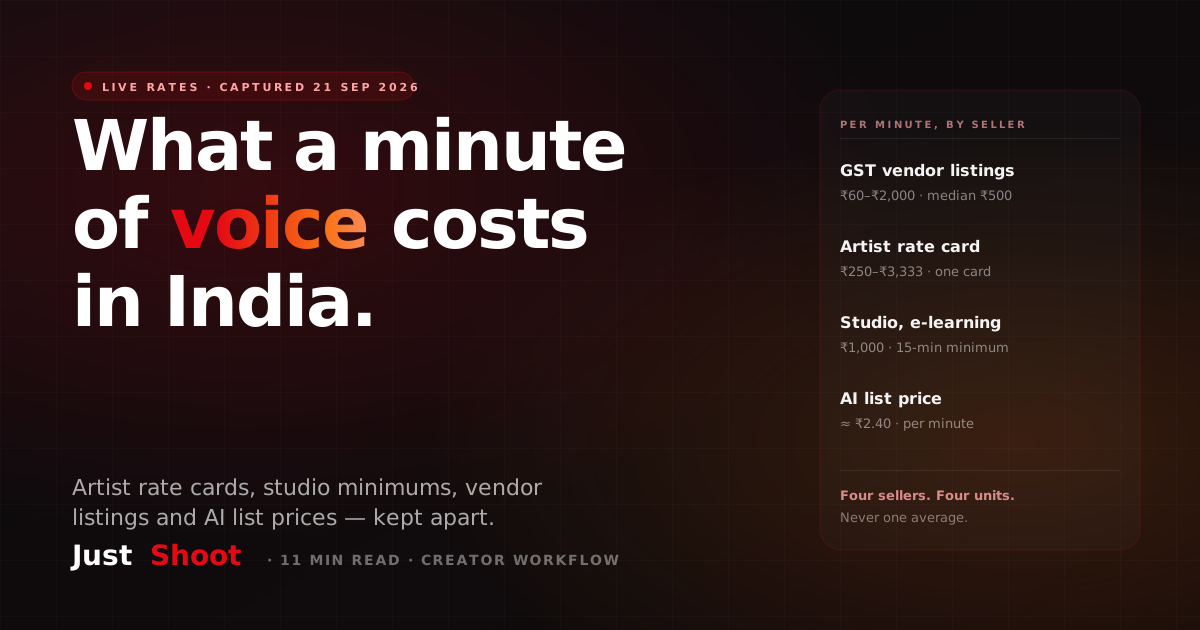
Voice-Over Artist Charges in India for YouTube (2026)
Artist rate cards, studio minimums, GST-vendor listings and AI list prices, captured 21 September 2026 — why the same minute costs ₹43 or ₹3,333.
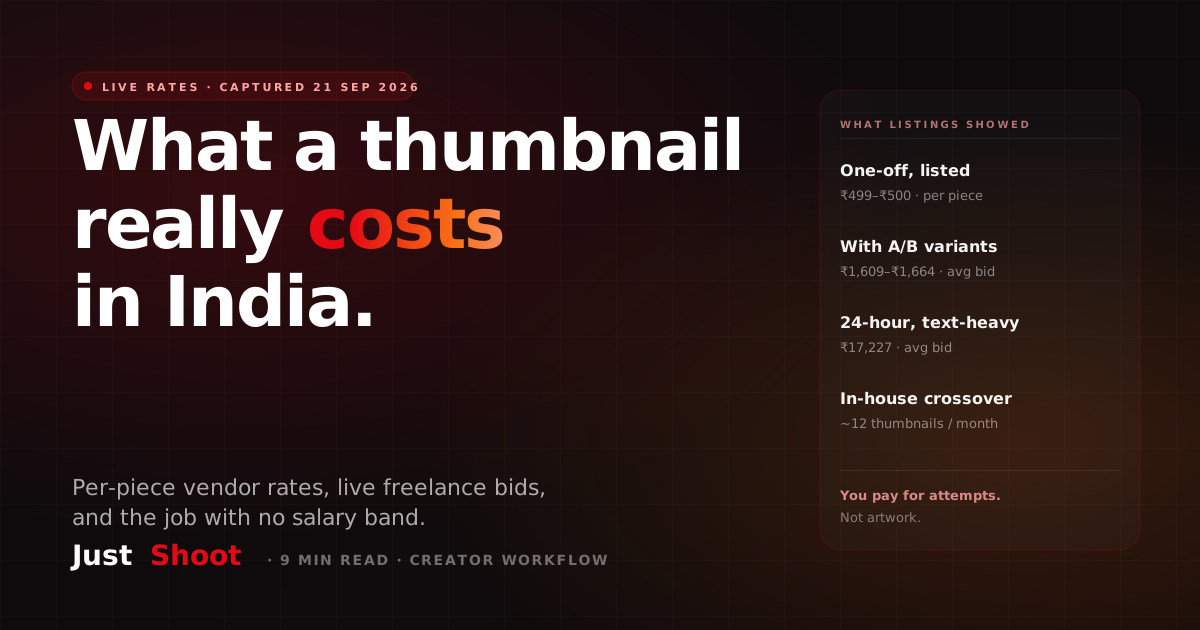
What YouTube Thumbnail Designers Charge in India (2026)
Per-piece vendor rates and live freelance bids captured 21 September 2026 — why the job has no salary band, and what actually moves the price.
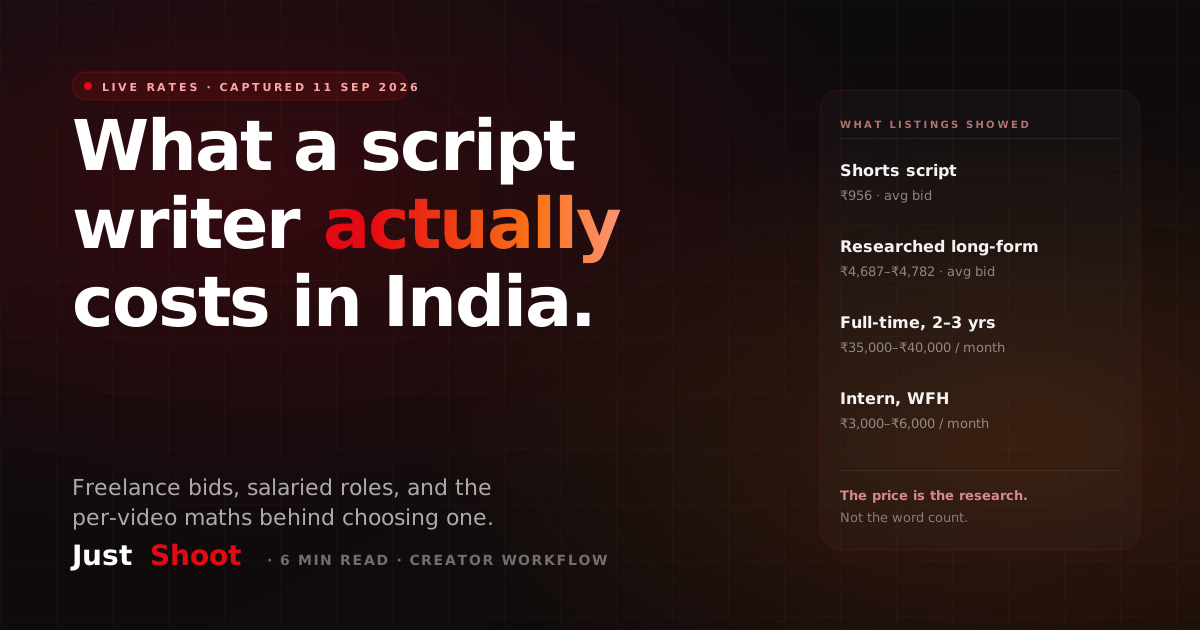
What YouTube Script Writers Charge in India (2026)
Real rates from live listings captured on 11 September 2026 — freelance per-script bids, full-time salaries, and the per-video maths that tells you which one you actually need.