YouTube Sponsorship Pitch Script + Ad-Read Template (India, 2026)
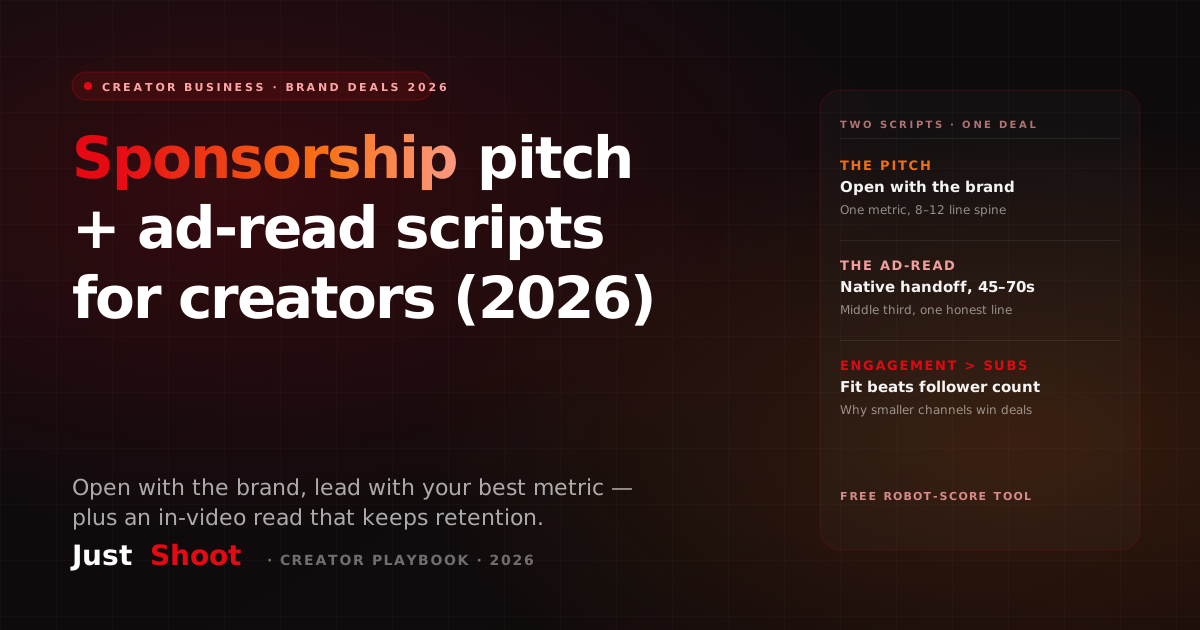
The two brand-deal scripts nobody teaches Indian creators: the sponsorship PITCH that lands the deal, and the in-video AD-READ that doesn't tank retention. With a copy-paste spine.
YouTube Sponsorship Pitch Script + Ad-Read Template (India, 2026)
By Ashok Sachdev, Founder of JustShoot · Published 16 July 2026
Short answer: A brand deal needs two scripts, not one. The pitch is the email/DM that lands the deal — open with the brand's goal (not your channel), lead with your single strongest metric, and lay out an 8–12 line deliverable spine. The ad-read is the 45–70 second segment inside your video — a native handoff from your content that keeps retention instead of cratering it. Most Indian creators write neither and wing both. Here is the copy-paste version of each.
This is a business-workflow guide, not legal or tax advice. Read your contract, and price your own rates.
Why two scripts, and why creators lose deals
Brands don't pay for subscribers. They pay for outcomes — clicks, installs, trust transferred from you to them. That reframes everything. The creator who writes "I have 50k subs, sponsor me?" loses to the creator who writes "your target buyer watches my channel, and here's the proof." Same channel, different script.
And once the deal is signed, the money moment is the ad-read — the 60 seconds where you either sell honestly and keep your viewer, or read a robotic paragraph the brand emailed you and watch your retention graph fall off a cliff. Both are writing problems. Both are solvable with a template.
Part 1 — The sponsorship pitch script
The one rule: open with the brand, not yourself
The first two lines decide whether a busy marketing manager reads on. Lead with their world.
Subject: [Their product] × [Your channel] — [specific audience they want]
Hi [name], I make [niche] videos for [specific audience] in India — the exact people who [buy/use their category]. I've watched [Brand] show up in [their recent campaign/ad], and I think a native integration on my channel would reach them mid-decision, not mid-scroll.
No "I'm a big fan." No subscriber flex yet. You've told them who you reach and why it maps to their buyer in two sentences.
Lead with ONE metric — the strongest, most relevant one
Do not paste your whole analytics dashboard. Pick the single number that proves buyer-intent for this brand:
- Selling a course? → average view duration ("viewers watch 7:20 of my 11-min videos").
- Selling an app? → click-through on a past link or pinned comment.
- Selling to a region/language? → audience geography / language split.
Engagement rate beats subscriber count for brands. A 20k-subscriber channel with a 9% engagement rate and a tightly-defined niche out-converts a 200k channel of passive viewers — and smart brands know it. If your subs are modest, this is your leverage, so make the metric do the talking.
The 8–12 line deliverable spine
Brands want to know exactly what they're buying. Spell it out:
- Format — dedicated video, 60s integration, or Shorts series.
- Placement — where in the video the ad-read sits (see Part 2).
- Deliverables — 1 main video + 1 Short + 1 pinned comment link, for example.
- Timeline — script approval → shoot → publish dates.
- Usage — organic only, or whitelisting/paid amplification (charge more for the latter).
- One honest metric estimate — realistic views based on your last 5 videos, not your best-ever.
- Rate — your number, GST handled separately.
Keep it skimmable. A marketing manager forwarding your pitch internally should be able to copy this block into a deck.
Close with a soft, specific CTA
End with a low-friction next step: "Happy to send a 30-second sample ad-read in your brand voice before we commit — want me to?" Offering a sample is the highest-converting close because it removes the brand's biggest fear: that you'll sound off-brand or unnatural.
Part 2 — The in-video ad-read script
The ad-read is where deals go to die on your retention graph. A native handoff fixes it.
The native handoff (don't hard-cut to "This video is sponsored by…")
Bridge from your content into the read so the viewer barely registers the seam:
"…and that's the exact problem I hit last month — which is actually why [Brand] reached out. [One honest sentence about the problem it solves for you]. [What it does, plainly]. [The specific action + where the link is]. Okay — back to it."
Four beats: bridge → honest problem → plain benefit → clear action. Then return to your content immediately. No 90-second monologue.
Keep it 45–70 seconds and put it in the middle third
Front-loaded ad-reads (first 60 seconds) tank the video before it builds momentum. End-card reads get skipped. The middle third — after you've delivered a payoff and earned attention — holds retention best. Script the read to a strict 45–70 seconds; anything longer reads as a paid interruption.
Say one true thing you actually believe
The single biggest retention-saver is a sentence of genuine opinion: "I wouldn't read this if the free tier didn't actually work." Viewers forgive an ad they trust. They punish an ad that sounds like a hostage reading. If you can't say one honest thing about the product, the deal isn't worth your retention.
Run it through a robot-check before you record
Brand-supplied copy is almost always stiff. Before you record, paste your ad-read into the free AI Script Robot-Score tool — it flags the exact lines that sound machine-written and shows you how to rewrite them in your own voice. A native-sounding read is the difference between a renewal and a one-off.
Where JustShoot fits
Writing both scripts in your voice — not a template that sounds like everyone else — is the whole game. JustShoot's 9-agent pipeline already writes your video script in your own tone fingerprint, and agent #09 (distribution) drafts the integration copy and pinned-comment CTA so the ad-read matches how you actually talk. It's built for Hindi, Hinglish and regional creators publishing 2–4 videos a month.
Pricing is simple and GST-inclusive: a free 7-day trial (2 scripts, no card), Starter ₹499/mo (3 scripts), Creator ₹999/mo (7 scripts — most popular), Pro ₹1999/mo (15 scripts), and Studio (custom, talk to us). Fixed scripts per month, no rollover, monthly only. If your brand-deal volume is picking up, that's a rounding error against one sponsorship.
For the money side of the creator business, see how much Indian YouTubers actually earn in 2026.
FAQ
How do I write a YouTube sponsorship pitch that gets replies? Open with the brand's goal, not your channel. Lead with one strong, relevant metric (engagement rate or average view duration beats raw subscriber count), lay out an 8–12 line deliverable spine, and close by offering a free 30-second sample ad-read in their voice.
What should a YouTube ad-read script include? A native handoff from your content, an honest one-line problem the product solves, a plain benefit, a clear action with the link location, and one sentence of genuine opinion. Keep it 45–70 seconds in the middle third of the video.
Where in the video should the sponsored segment go? The middle third. Front-loaded reads tank retention before the video builds momentum, and end-card reads get skipped after viewers have their payoff.
Do brands care about subscriber count or engagement rate? For conversion-focused deals, engagement rate and audience fit matter more. A smaller channel with a tight niche and high engagement often out-converts a large passive audience — lead your pitch with that.
Can AI write my sponsorship scripts? It can draft both fast, but the ad-read must sound like you or it kills retention. Draft with a tool like JustShoot, then run the read through a robot-score check and rewrite any stiff lines before recording.
This is a creator-business workflow guide, not legal, tax, or financial advice. Review your own contracts and set your own rates. — Ashok Sachdev
How Big Is Influencer Marketing in India? Three Estimates Compared (2026)
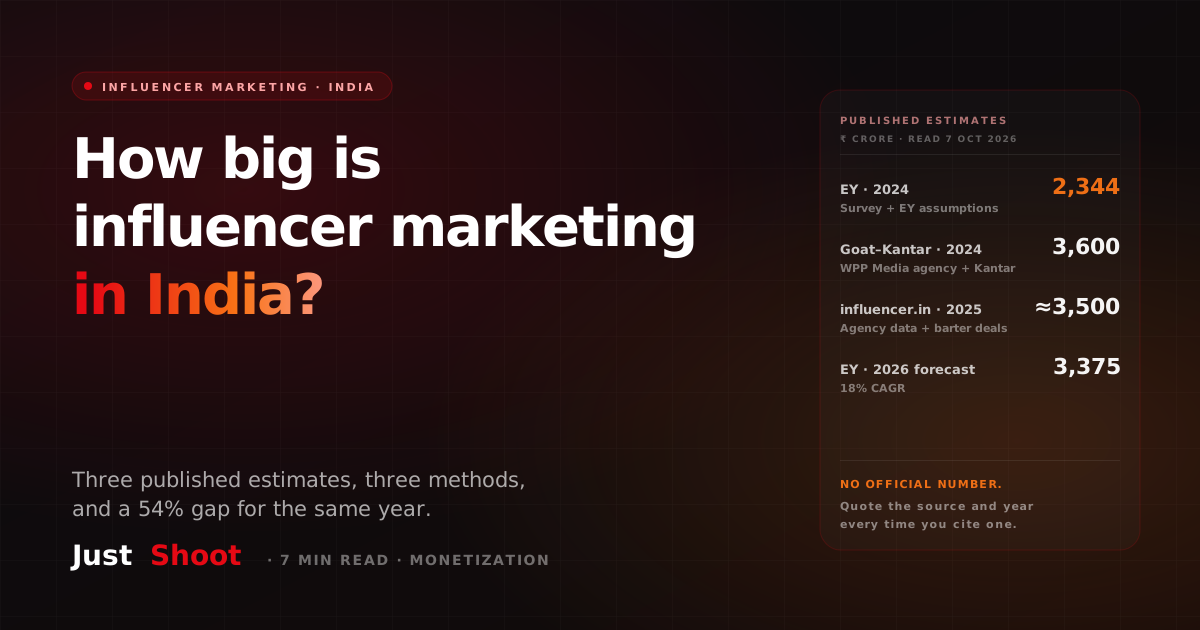
EY, WPP Media's Goat Agency with Kantar, and influencer.in each size India's influencer marketing market. Their 2024 numbers differ by over half. Here is why.
How to Check If Your YouTube Script Sounds AI-Generated (2026)
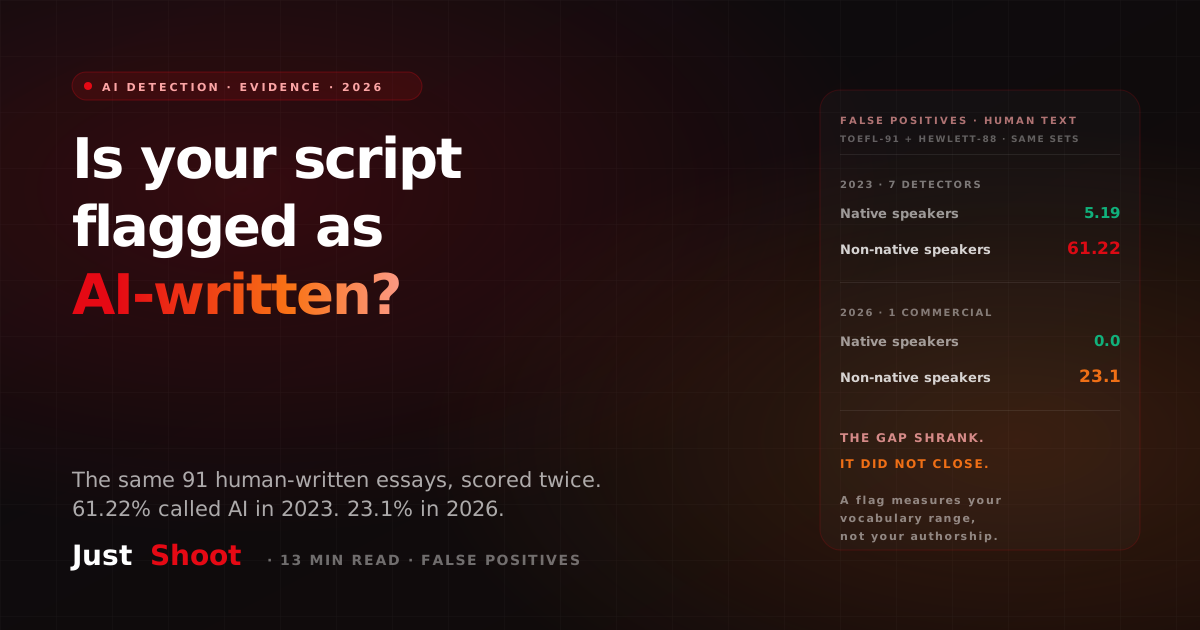
The same 91 human-written essays were scored by AI detectors twice: 61.22% were flagged as AI in 2023, 23.1% in 2026. Native-speaker essays scored 5.19% and 0.0%.
How Accurate Are YouTube's Auto-Captions in Hindi? (2026)
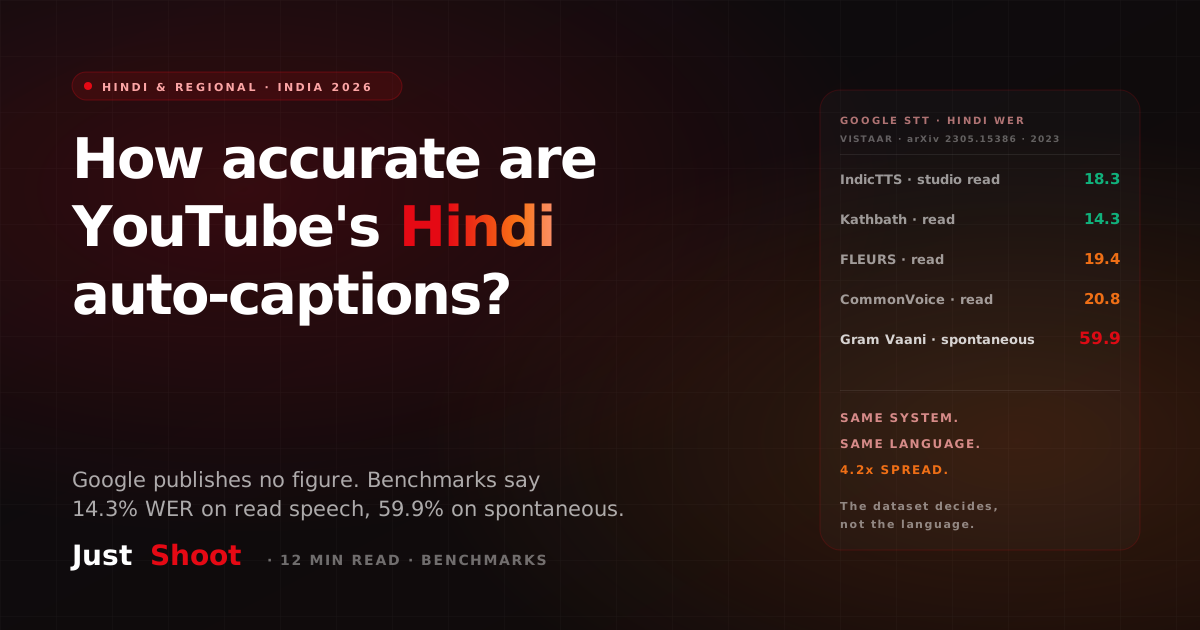
Google publishes no Hindi accuracy figure for YouTube captions. The nearest dated benchmarks put Hindi ASR between 14% and 60% word error rate, depending entirely on the dataset.