YouTube SEO Score Checker: The Free Tool That Grades Any Video (India, 2026)
Free YouTube SEO score checker — paste any video URL, get a 0–100 score across 9 checks with an A–F grade and ranked fixes. Three graded examples inside.
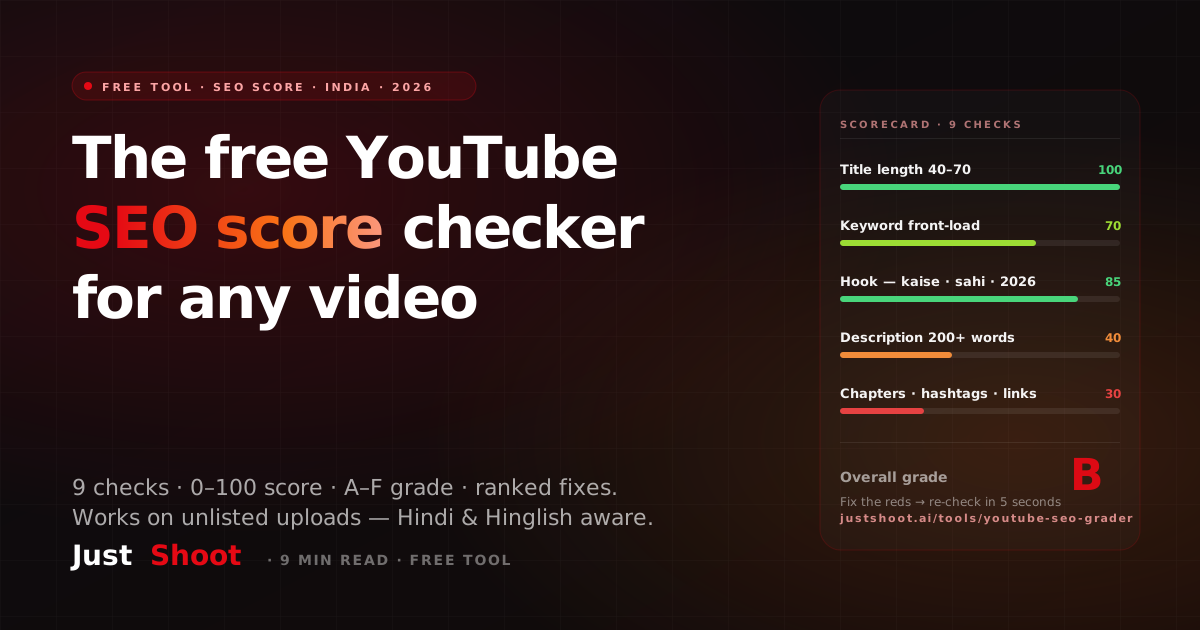
YouTube SEO Score Checker: The Free Tool That Grades Any Video (India, 2026)
By Ashok Sachdev, Founder of JustShoot · Published 2026-07-08
Short answer: JustShoot's free YouTube SEO Grader is a YouTube SEO score checker: paste any video URL — public or unlisted — and it scores nine publish-time signals (title length, keyword placement, hook, format, description depth, chapters, hashtags, links, thumbnail) from 0–100 each, averages them into one A–F grade, and ranks the fixes. No signup, results in about five seconds.
I'm going to walk through exactly what the score measures, the real thresholds behind each of the nine checks, and three worked examples — a D, a C, and an A — so you can see precisely where points leak and how to get them back. No black box: every number below comes from the grader's actual scoring rules.
What does a YouTube SEO score actually measure?
A YouTube SEO score measures the publish-time metadata signals YouTube's search crawler reads the moment you upload — before a single viewer arrives. That's the honest scope of any pre-publish checker, and it's worth being precise about, because plenty of tools blur it.
Every video gets judged twice. The second judgment — CTR, watch time, retention — happens after publish, lives inside YouTube Studio's private analytics, and no external tool can grade it in advance. The first judgment is different: your title, description, chapter timestamps, hashtags, and thumbnail metadata are all readable from the video URL itself. Those signals are deterministic, checkable, and — crucially — every one of them is something you can edit in YouTube Studio in the next ten minutes.
The grader reads that public metadata directly from the video page (which is why it needs no YouTube API key, no browser extension, and no channel connection). It scores nine dimensions at 0–100 each, averages them, and maps the result to a grade: 85+ is an A, 70–84 a B, 55–69 a C, 40–54 a D, below 40 an F. Each dimension that scores low comes back with a specific fix, ordered by ranking impact.
If you're weighing this against extension-based suites like vidIQ or TubeBuddy, I've ranked the whole category honestly — including where competitors beat us — in the best YouTube SEO tools for Indian creators roundup. The one-line difference: those tools blend private channel analytics into their scores; this checker grades only what's editable, on any video, from just a URL.
How does the grader score each of the nine dimensions?
Here are the actual rules, with the real thresholds:
- Title length. 40–70 characters scores full marks — the mobile SERP optimum. 30–39 characters scores 70 ("leaving SERP real estate unused"), 71–100 scores 65 (mobile truncates), under 30 scores 30, over 100 scores 25.
- Keyword front-loading. The checker looks at your first four words, throws out filler ("the", "a", "and", "for"…), and counts what's left. Three or more meaningful words up front scores 100; two scores 70; a filler-heavy opening scores 40 with the fix "move the primary keyword into the first three words."
- Hook strength. The first six words are scanned for action and curiosity words — and the built-in word list is bilingual: how, why, best, secret, free count, and so do kaise, kya, kyun, bina, sirf, sahi, jaldi, dekho, seekho. Each hit adds 30 points, a number anywhere in the title adds 25, capped at 100. Below 70 triggers the fix: add an action word or a number in the first five words.
- Format hygiene. An all-caps title (over 20 characters) drops to 40 — YouTube's systems read it as shouting. Heavy emoji use (more than three) or decorative symbols drop to 50.
- Description depth. 200+ words scores 100. 100–199 scores 70, 50–99 scores 40, and a near-empty description scores 15. Depth is long-tail keyword coverage — thin descriptions surrender SERP real estate.
- Chapter timestamps. Five or more line-start timestamps scores 100; three or four scores 80 (YouTube's minimum of 3 for the chapter SERP feature); one or two scores 40; none scores 0.
- Hashtags. Three to eight niche hashtags scores 100 — the first three surface above your title on mobile. One or two scores 60; none scores 30.
- Links and CTAs. Three or more links in the description (social, sponsor, related video) scores 100; one or two scores 70; none scores 30.
- Thumbnail availability. Binary: a set thumbnail scores 100 (image SERP eligibility), a missing one scores 0.
Notice what's not in the list: views, subscriber count, upload frequency. The score is deliberately blind to channel size — a 500-subscriber channel and a 5-million-subscriber channel get graded by identical rules, because the metadata signals are the part of ranking that doesn't care who you are.
What do a low score and a high score actually look like?
Three scenarios, run against the real scoring rules above.
Example 1 — the D (49/100). A cooking channel uploads "STREET STYLE PANEER TIKKA RECIPE AT HOME!!!" with a two-line description. Title length is fine (43 characters — full marks) and the keyword is front-loaded, but the all-caps formatting drops hygiene to 40, and there's no action word or number in the opening six words, so hook strength bottoms out at 30. The 25-word description scores 15, zero chapters scores 0, no hashtags and no links score 30 each. Average: 49 — a D. The ranked fixes: rewrite in sentence case, write 200+ words of description, add three chapters. Twenty minutes of work, and this exact video re-grades around a B.
Example 2 — the C that thinks it's fine (62/100). A tech reviewer publishes "I Tested the New Budget Phone Everyone Is Talking About and Here's What I Found After 30 Days". It reads well — but at 94 characters it truncates on mobile (65 points), and the only hook signals in the first six words are "new" plus the number, landing hook strength at a weak 55. A 60-word description (40), two timestamps (40), zero hashtags (30), zero links (30). Average: 62 — a C. This is the most common failure mode I see on Indian channels: a clickable title hiding an empty description.
Example 3 — the A (93/100). A finance explainer uploads "SIP kaise shuru kare — sahi tarika 2026". Two Hinglish action words (kaise, sahi) in the opening six words plus a number pushes hook strength to 85. Keyword front-loading is perfect. The only leak is title length — at 39 characters it's one character short of the 40–70 band, scoring 70 with the fix "add a specifier like the audience or niche." A 220-word description (100), four chapters (80), four hashtags (100), three links (100), thumbnail set (100). Average: 93 — an A. Note what happened: a Hinglish title outscored a polished English one, because the checker's hook rules are calibrated for how Indians actually search.
Kya India-specific checks really matter?
Yes — and this is the gap that made me build the grader instead of pointing people at US tools. Most YouTube audit tools are trained on English keyword patterns, so a title like "SIP kaise shuru kare" gets scored as if it contains no keywords at all. In reality, kaise is one of the highest-volume search operators on Indian YouTube — "video editing kaise kare" out-volumes its English equivalent across the Hindi belt.
The grader treats Hindi-Latin action words as first-class hook signals: kaise, kaisi, kya, kyu, kyun, bina, sirf, sahi, galat, seedha, jaldi, abhi, jaane, dekho, seekho all count toward hook strength exactly like how or best do. Title-length measurement is unicode-aware, so a Devanagari title isn't mis-measured the way byte-counting tools mangle it. If your channel runs Hinglish, you're not fighting the scoring model — you're being scored by rules that know your market.
Can you check a video's SEO before it goes public?
Yes — this is the workflow the tool was built around. Upload your video as unlisted, paste the unlisted URL into the checker, fix everything that scores red in YouTube Studio, re-paste to confirm the grade moved, then flip the video public. Unlisted videos grade fine because the checker reads the same publish-time metadata YouTube's crawler sees; only private videos can't be graded. Your video enters search already passing, instead of you discovering a thin description three days after the upload window that mattered.
Three more things the URL-only design gets you: it works on YouTube Shorts links, it works on competitors' videos (paste the video that outranks you and see exactly which dimensions it wins on), and it's genuinely free — five grades an hour without giving anything, twenty an hour if you drop an email, which also gets you the full PDF audit with side-by-side rewrites of your title and description.
The grader diagnoses one video at a time. If you want the full pre-upload discipline — keyword validation, captions, pinned comments, end screens and the rest — work through the 18-step YouTube SEO checklist for Indian creators alongside it.
Where does the grader stop — and what fixes the score permanently?
The checker grades what you've already written. It can't write the 200-word description for you, and it can't stop next week's upload from shipping with the same three red dimensions — recurring reds across your last five uploads are a channel-level habit, not a one-video mistake.
That habit is what JustShoot exists to break. Its 9-agent pipeline includes an SEO agent that generates titles, descriptions, hashtags, and chapter timestamps that pass every one of the grader's checks by default — keyword front-loaded, hook-worded, 200+ words deep, chaptered — in your channel's own tone, Hindi and Hinglish included. Pricing is simple: Trial ₹0 (7 days, 2 scripts, no card) · Starter ₹499/month (3 scripts) · Creator ₹999/month (7 scripts, most popular) · Pro ₹1999/month (15 scripts) · Studio custom — fixed scripts per month, no rollover, GST-inclusive, monthly only, and every plan gets the full pipeline.
But start with the diagnosis: grade your latest video free and see which of the nine dimensions is quietly costing you rankings.
FAQ
What is a good YouTube SEO score?
On this checker's 0–100 scale, 85 or above is an A — publish as-is. 70–84 (B) means one or two dimensions are leaking points, usually description depth or chapters. Anything at C or below (under 70) has fixable metadata problems that are actively suppressing search placement, and the ranked fix list tells you which ones move ranking most.
How do I increase my YouTube SEO score for free?
Apply the ranked fixes the checker returns, in order: they're sorted by ranking impact. The three highest-leverage fixes for most Indian channels are pushing the description past 200 words, adding at least three chapter timestamps, and moving the primary keyword into the first three words of the title. All three are free edits in YouTube Studio — re-paste the URL afterwards to confirm the grade moved.
Does the SEO score checker work on YouTube Shorts?
Yes. The checker parses standard watch URLs, youtu.be short links, and youtube.com/shorts/ links, and grades them against the same nine dimensions. Titles, hashtags, and description depth matter for Shorts search placement too, even though Shorts distribution leans more heavily on the feed.
Can I check a competitor's YouTube SEO score?
Yes. Because the checker needs only a URL — no channel access, no extension — you can grade any public video, including the one currently outranking yours. Compare its dimension-by-dimension breakdown against your own video's and you'll see exactly which publish-time signals it wins on, and which of its weaknesses you can out-optimize.
How many videos can I grade per hour?
Five per hour anonymously, or twenty per hour once you've submitted an email — limits are per connection, and reset every hour. The email also gets you the full PDF audit with side-by-side rewrites of your title and description. Grading itself never requires signup or payment.
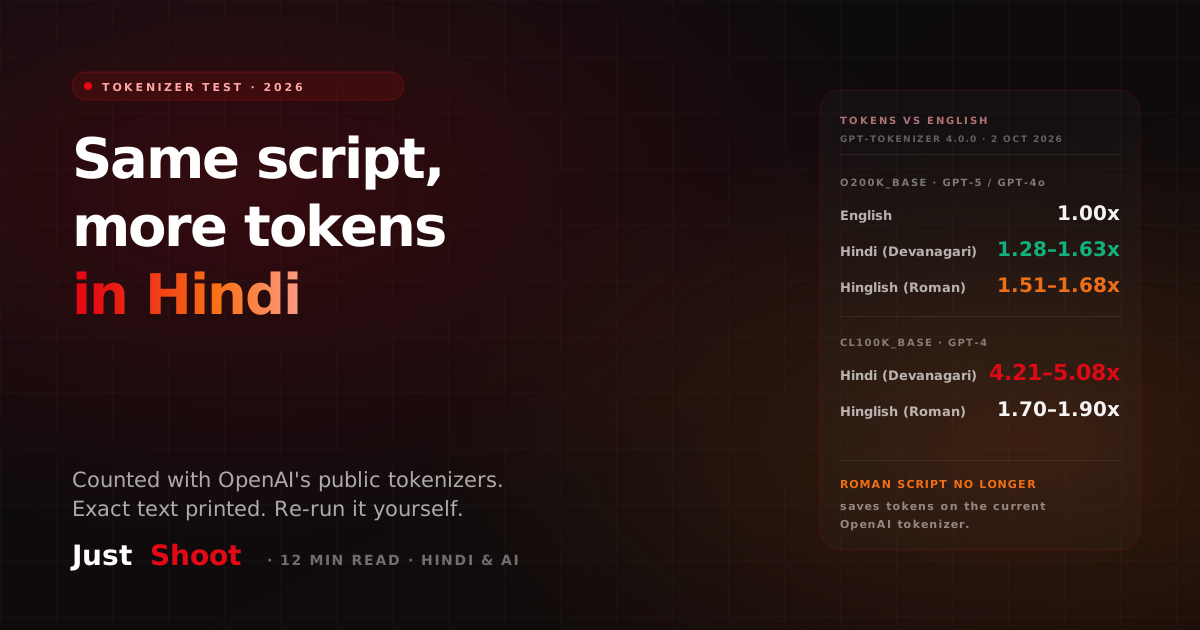
A Hindi Script Costs More Tokens Than the Same Script in English (2026)
One YouTube script in English, Devanagari Hindi and Hinglish, run through OpenAI's public tokenizers. On GPT-5's, Hindi costs 1.28–1.63x the English tokens.
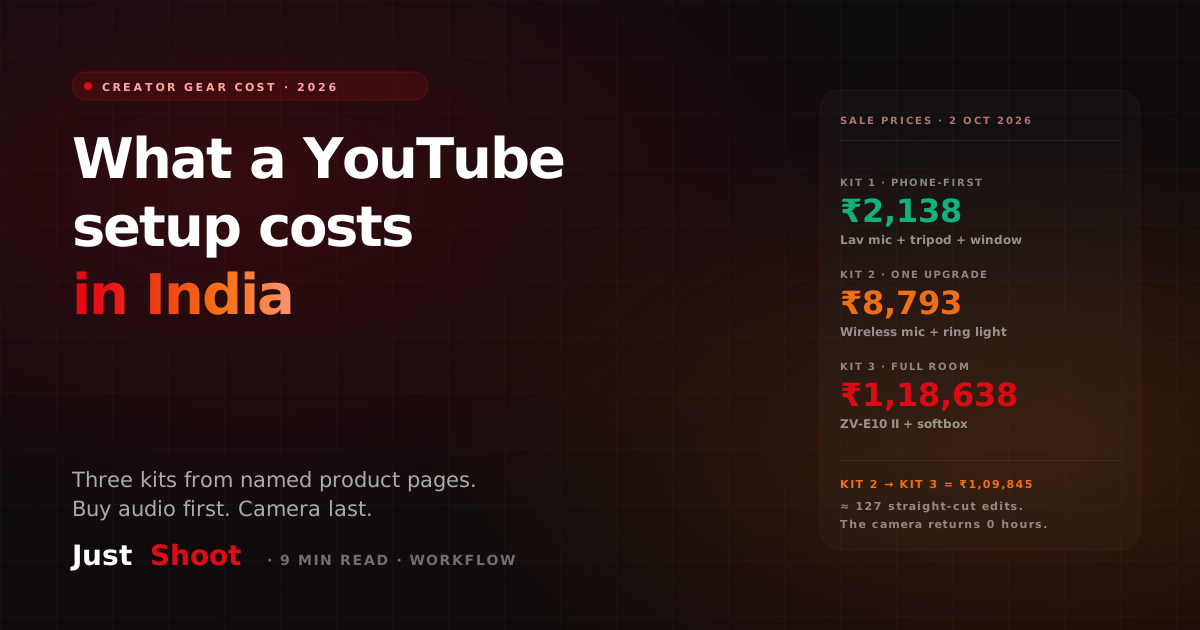
What It Costs to Kit Out a YouTube Setup in India (2026)
Three YouTube starter kits with rupee totals — ₹2,138, ₹8,793 and ₹1,18,638 — from named Indian product pages captured 2 October 2026, and what not to buy first.
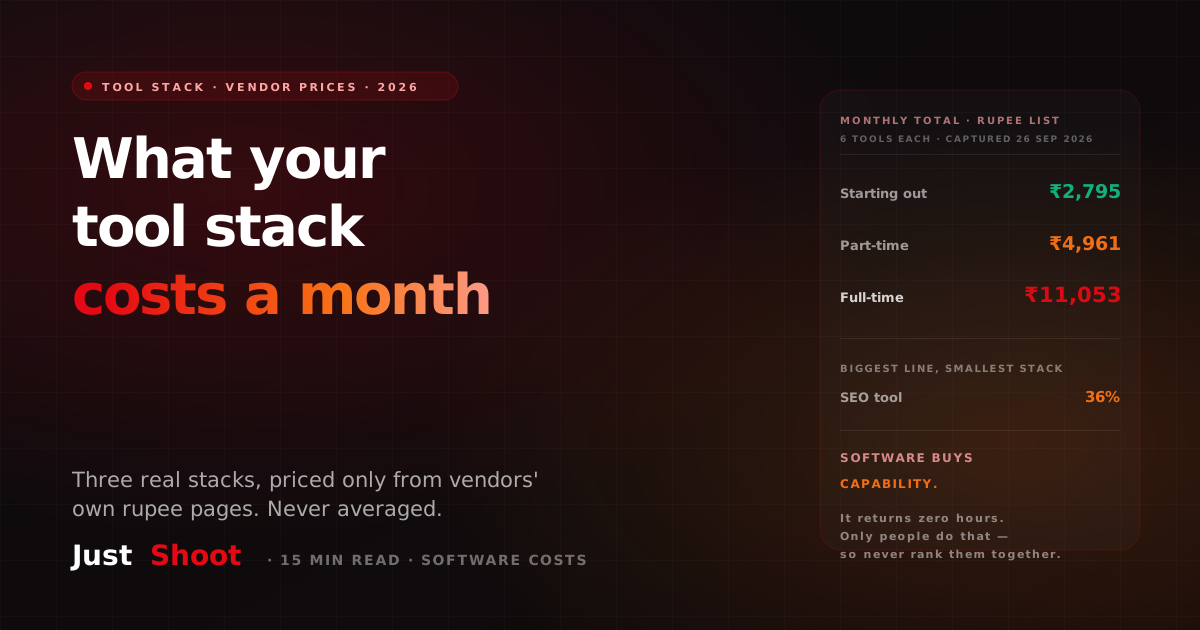
What an Indian YouTuber's Tool Stack Costs a Month (2026)
Three real creator tool stacks priced only from vendors' own India rupee pages on 26 September 2026 — ₹2,795, ₹4,961 and ₹11,053 a month, kept separate and never averaged.