How to Self-Edit a YouTube Script: The 10-Point Revision Checklist (India, 2026)
Self-edit your YouTube script before you shoot — the cut-the-first-paragraph rule, the read-aloud test, and a 10-point revision checklist that wins retention in the second draft.
How to Self-Edit a YouTube Script: The 10-Point Revision Checklist (India, 2026)
By Ashok Sachdev, Founder of JustShoot · Published 2026-06-29
Short answer: To self-edit a YouTube script, do one pass with one goal: tighten. Cut the first paragraph (your real opening is almost always the second one), read the whole thing aloud and rewrite anything you stumble on, delete filler words, and check that every minute earns the next. Most creators write a draft and shoot it. The creators who hold retention shoot the second draft — the one that survived a deliberate revision pass. Run the 10-point checklist below before you ever hit record.
I build a scripting tool for Indian creators, and across thousands of scripts the single cheapest retention gain is not a better hook idea — it is the polish pass everyone skips. Writing is where the idea is born; editing is where the video is won. Here is exactly how to run that pass on yourself.
Why the second draft is where retention lives
A first draft is written forward — you are discovering what you think as you type, so it rambles, repeats, and warms up slowly. That is normal and fine. The problem is shooting the first draft, because every warm-up sentence, every "so basically," every restated point is a place the viewer can leave. Retention is a leak problem, and a first draft is full of small leaks. A machine pass catches a different set of leaks than your ear does: the free AI Script Robot-Score flags the stock phrasing and filler a draft has stopped surprising you with.
The fix costs nothing: a single revision pass with a cutting mindset. You wrote to find the video; now you edit to sharpen it. This is a distinct stage from writing — different headspace, different goal. If you write and edit in the same pass, you self-censor and the draft never gets loose enough to be good. Write loose, then cut hard. (For where editing sits in the larger flow, see our full script-writing process.)
The two rules that do most of the work
Rule 1 — Cut the first paragraph. Your strongest opening is almost never your first sentence; it is buried two or three lines in, after you have warmed up. Read your draft and find the most interesting sentence in the first 30 seconds. Delete everything before it. That sentence is your real hook. This single cut fixes more weak openings than any hook formula, and it pairs directly with the first-30-seconds hook discipline.
Rule 2 — Read it aloud, every word. A script is spoken, not read. If you stumble over a sentence reading it out, you will stumble on camera too — and worse, the viewer will feel the friction. Every place your tongue trips is a place to rewrite shorter. Reading aloud also exposes sentences that look fine on the page but sound robotic out loud, which is the tell Indian audiences catch fastest.
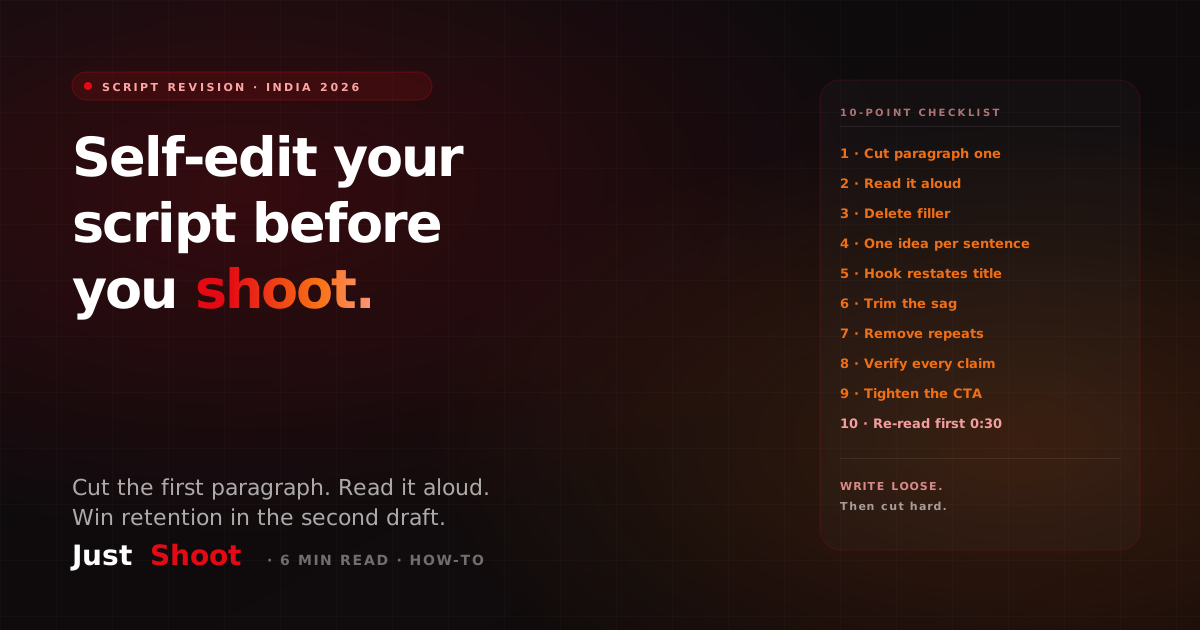
The 10-point revision checklist
Run these in order. One pass, top to bottom.
- Cut the first paragraph. Start on the most interesting sentence you have.
- Read the whole script aloud. Rewrite every sentence you stumble on.
- Delete filler. Kill "basically," "actually," "at the end of the day," "you know," "so yeah." They add length, not meaning.
- One idea per sentence. If a sentence has two clauses doing two jobs, split it. Spoken English breathes in short units.
- Check the hook restates the title's promise. If a viewer arrived on a promise, the open must confirm it in the first line.
- Trim the middle for pace. Find the slowest 30 seconds and either cut it or add a pattern-interrupt. The sag is usually two-thirds in.
- Remove repeated points. First drafts say the same thing three ways. Keep the sharpest version, delete the other two.
- Verify every claim. Every stat, date, and "studies show" needs a source — or it gets cut. (A fact-check pass catches the hallucinated number before it costs you credibility.)
- Tighten the CTA. One clear ask tied to the value delivered beats three vague ones. Cut "smash like, subscribe, comment, and share."
- Read the first 30 seconds one last time. This is the only part most viewers see. It must be your sharpest 30 seconds, not your warm-up.
The read-aloud test, in detail
The read-aloud test is the highest-leverage item on the list, so do it properly. Read at performance pace, out loud, as if recording. Watch for three things: sentences you stumble on (rewrite shorter), sentences that sound like a textbook (rewrite in how you actually talk), and points where you get bored (the viewer left ten seconds earlier — cut or accelerate). If you can read the whole script aloud without wincing, it is ready to shoot. If you wince, that line is your next edit.
Where JustShoot fits
Inside JustShoot's 9-agent pipeline, the revision pass is partly automated: the script agent produces a tightened draft in your locked voice, and the fact-check agent flags weak or unsourced claims before you ever read it aloud. You still run the human read-aloud test — no tool replaces your ear for your own voice — but you start the revision from a draft that is already trimmed, not from a rambling first pass.
JustShoot starts at Trial ₹0 (7 days, 2 scripts, no card), then Starter ₹499/mo (3 scripts), Creator ₹999/mo (7 scripts, most popular), Pro ₹1999/mo (15 scripts), and Studio is custom. Every plan runs the full pipeline — only the number of scripts changes.
Want to know if your edited script still reads human or has drifted robotic? Run it through the JustShoot Robot Score tool — about a minute, free.
FAQ
How do I edit a YouTube script before filming? Run one revision pass with a cutting mindset: cut the first paragraph, read the whole thing aloud and rewrite anything you stumble on, delete filler words, remove repeated points, and verify every claim. Edit in a separate pass from writing — write loose, then cut hard.
What is the cut-the-first-paragraph rule? Your strongest opening is rarely your first sentence; it is two or three lines in, after you have warmed up. Find the most interesting sentence in the first 30 seconds and delete everything before it. That is your real hook, and the single fastest fix for a weak open.
Why is the read-aloud test so important? A script is spoken, not read. Sentences that look fine on the page can be impossible to say smoothly. Every place you stumble reading aloud is a place you will stumble on camera and the viewer will feel the friction — so each stumble is a signal to rewrite shorter.
How long should self-editing a script take? Usually 15-25 minutes for a 10-minute video — far less than rewriting on camera through botched takes. The revision pass is the cheapest retention gain you can make, because every leak you cut on the page is a viewer you keep.
Can AI edit my YouTube script for me? AI can produce a tighter draft and flag unsourced claims, which removes the rambling and the hallucinated stats. But the read-aloud test — checking it sounds like you spoken out loud — stays human. The best workflow is an AI-trimmed draft plus your own ear.
Ashok Sachdev is the founder of JustShoot, an AI content OS that writes YouTube scripts in your own voice for Indian creators. Connect on LinkedIn.
How to Check If Your YouTube Script Sounds AI-Generated (2026)
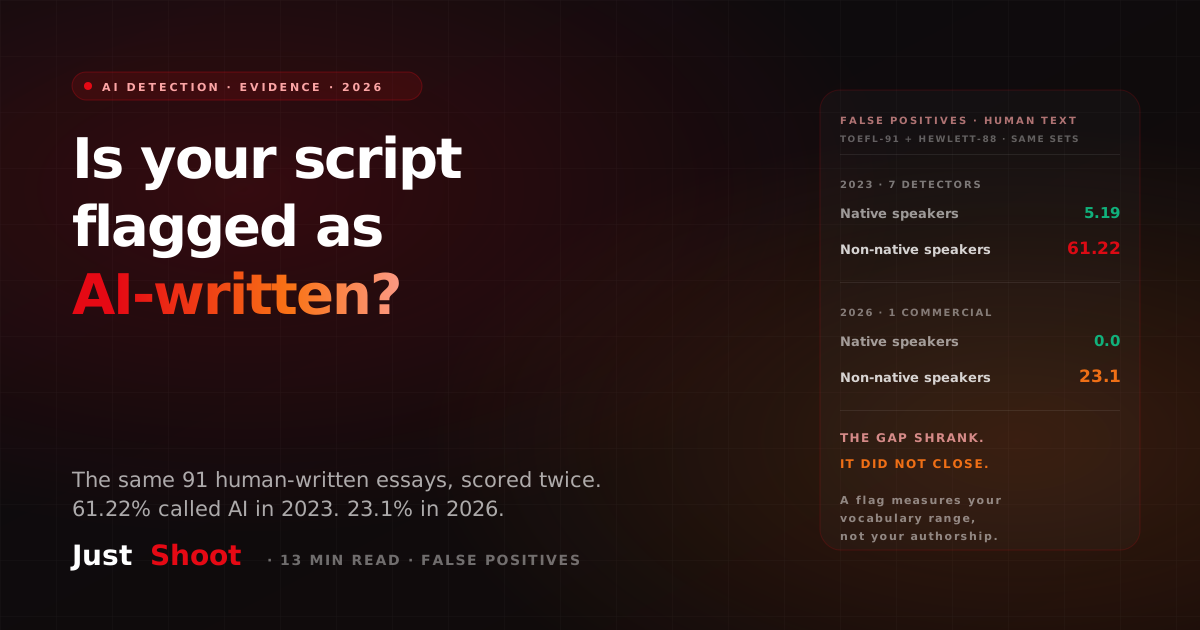
The same 91 human-written essays were scored by AI detectors twice: 61.22% were flagged as AI in 2023, 23.1% in 2026. Native-speaker essays scored 5.19% and 0.0%.
How Accurate Are YouTube's Auto-Captions in Hindi? (2026)
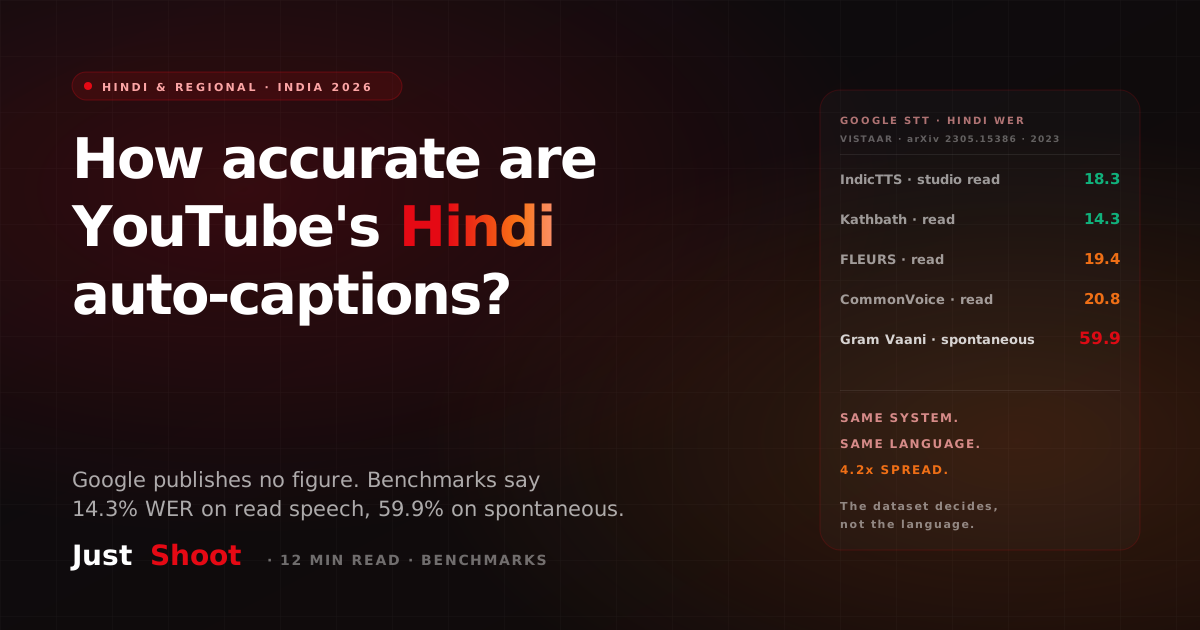
Google publishes no Hindi accuracy figure for YouTube captions. The nearest dated benchmarks put Hindi ASR between 14% and 60% word error rate, depending entirely on the dataset.
Best AI Malayalam YouTube Script Generator (2026)
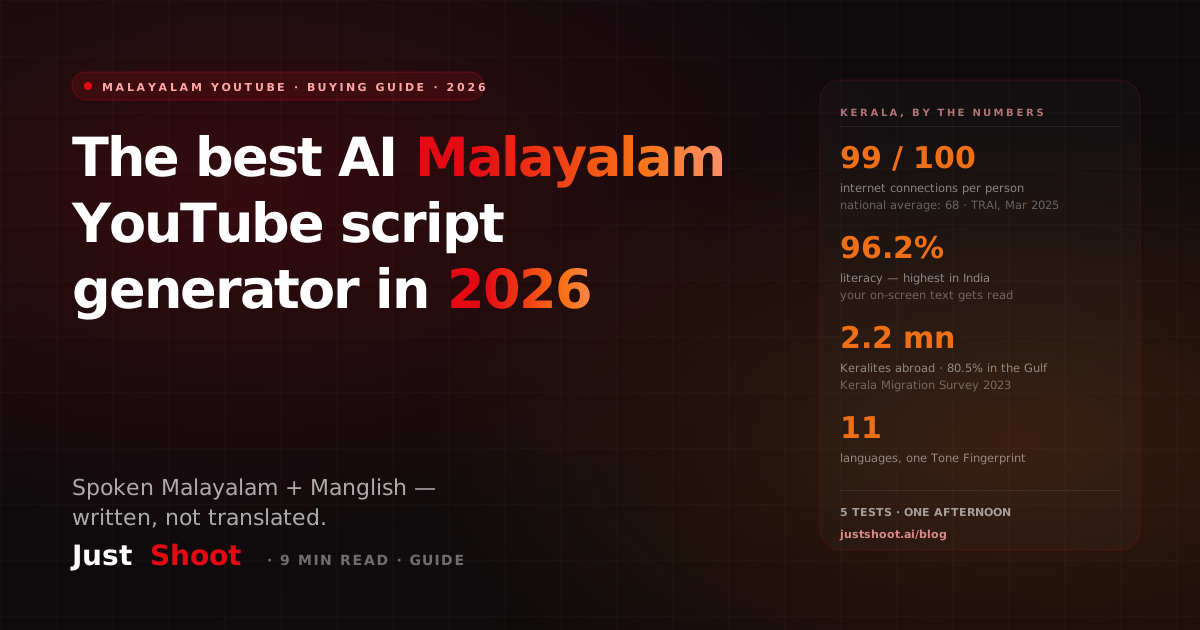
Which AI writes Malayalam YouTube scripts natively — spoken register, Manglish code-mix, dialect held steady? A buying guide for Kerala creators, with Kerala's real connectivity numbers and five tests to run before you pay.