Best AI YouTube Script Tool for Agencies Managing Multiple Channels (India, 2026)
Running YouTube scripts for several client channels? Why per-channel voice-lock beats per-document brand voice for agencies in India, 2026 — and how to scale.
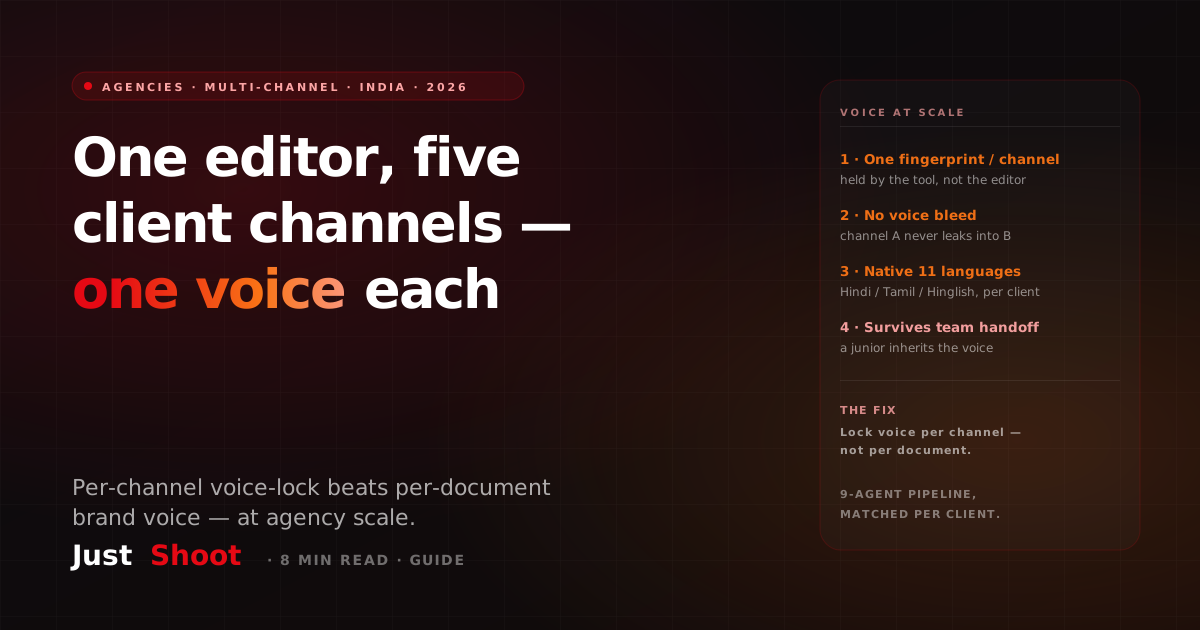
Best AI YouTube Script Tool for Agencies Managing Multiple Channels (India, 2026)
By Ashok Sachdev, Founder of JustShoot · Published 2026-07-01
Short answer: For an agency running multiple YouTube channels, the best AI script tool locks a separate, persistent voice per channel — not per document. Per-document brand voice resets every project; a per-channel voice fingerprint keeps each client's hook style, rhythm, and Hinglish blend consistent across every video, so five channels never blur into one house voice — even when four different editors are drafting.
If you run a YouTube agency in India, you already know the real bottleneck isn't ideas or editing — it's voice at scale. One editor drafts Monday's video for a Bengaluru finance channel, then Tuesday's for a Delhi food vlogger, then Wednesday's for a Tamil tech reviewer. Each client hired you because their channel sounds like them. The moment your scripts start sounding like one generic agency house-style, retention drops and the client feels it before they can explain it. This guide is about the one capability that fixes that — and why almost every "AI script tool" on the market gets it wrong for agencies.
What makes an AI script tool "agency-ready"?
Most "best AI script tool" lists rank single-creator features: speed, hook templates, a chat box. An agency needs a different checklist. A genuinely agency-ready tool has to:
- Hold a distinct voice for each channel that persists across every video, not just the current document.
- Keep client voices from bleeding — channel A's punchy Hinglish should never leak into channel B's calm Hindi explainer.
- Support team handoff — a new editor should inherit the channel's voice, not relearn it.
- Work in Indian languages natively, because half your roster probably publishes in Hindi, Tamil, Telugu, or a Hinglish blend.
- Produce more than a script — thumbnail, SEO, and shorts that match the same brief, so a junior doesn't ship a mismatched package.
Tools like TubeMagic offer a multi-channel dashboard, and Jasper lets you save brand profiles — but "a place to switch channels" is not the same as "a voice that stays locked per channel and survives every editor and every draft." That distinction is the whole game.
Why does per-document brand voice break at agency scale?
Here's the trap. Tools like Jasper and Copy.ai were built for marketing teams producing many one-off assets. Their "brand voice" is applied per document — you pick a voice profile each time you start a draft, and the model re-applies it to that one piece.
For a marketing team writing landing pages, that's fine. For a YouTube agency, it quietly falls apart, for three reasons:
- It relies on the editor remembering. Whoever opens the doc has to select the right client profile every single time. On a busy Friday with six drafts due, someone forgets, and channel C ships in channel A's voice.
- The profile is shallow. A per-document brand voice captures adjectives ("friendly, witty") but not the structural fingerprint — your client's exact hook cadence, their sentence rhythm, their specific 70/30 Hinglish ratio, the identity phrases they repeat. Those are what make a channel recognisable, and they're the first things that wash out.
- It doesn't compound. Video #40 doesn't inherit anything learned from videos #1–39. Every script starts the profile from scratch, so consistency depends entirely on human discipline — which is exactly what breaks under volume.
At one channel, human discipline covers the gap. At five, ten, or twenty client channels, discipline is not a system. You need the voice to be held by the tool, per channel, automatically.
What is per-channel voice-lock, and why does it matter for agencies?
Per-channel voice-lock means the tool builds and stores a durable profile — a Tone Fingerprint — for each channel: its hook strategy, sentence rhythm, language balance (how much English vs Hindi it actually uses), transition style, and identity markers. That fingerprint is attached to the channel, not the document, so every new script for that channel is generated inside its voice by default.
The difference in practice:
- Per-document brand voice: "Editor, please remember to load the 'Rohan Finance' profile before you write." Miss it once, the video sounds wrong.
- Per-channel Tone Fingerprint: You open the Rohan Finance channel, and every draft is already in Rohan's voice — the blend ratio, the hooks, the register — whether it's you or a freelancer three time zones away drafting it.
For an agency, that's the difference between hoping the roster sounds consistent and knowing it does. It's also what lets you hire cheaper, less experienced writers: the voice is in the system, so a junior can produce a draft that sounds like a client who's been on the channel for two years. We go deeper on the single-channel version of this in how to write a YouTube script in your own voice with AI — the agency case is that same idea, multiplied and kept separate per client.
How do you stop five client channels from sounding the same?
This is the question that actually keeps agency owners up at night, so here's the concrete workflow:
- Onboard each channel as its own profile. Feed 3–5 of the client's existing videos so the tool extracts their real fingerprint — not a vibe you typed, but the measured hook/rhythm/blend from their actual output.
- Never write from a blank generic prompt. Always draft inside a channel's profile, so the voice is applied before you touch a word.
- Audit the blend, don't eyeball it. For Indian channels, the fastest tell of voice-drift is the language mix. Run a draft through the free Hinglish Ratio Analyzer to confirm channel B still sits at its own ratio, not channel A's.
- Lock roles, not passwords. On the YouTube side, use channel permissions to give each editor scoped access per client channel — cleaner and safer than sharing logins, and it mirrors how your scripting tool should scope voices per channel too.
- Keep the whole package matched. A mismatched thumbnail or title breaks the illusion as badly as a wrong-voice script. Generate them from the same channel context so the promise is consistent end to end.
Do this and "all our clients sound the same" stops being a risk you manage by hand and becomes a property of the workflow.
What about Indian-language client channels?
This is where the generic global tools fall hardest. A per-document brand voice tuned on English marketing copy cannot hold a Tamil creator's rhythm or a Hindi-first channel's natural code-switching. Worse, most tools translate into the language instead of writing in it, which is why AI regional scripts so often sound translated rather than native.
For an Indian agency, "agency-ready" therefore also means native, per-channel, multi-language: your Bengali channel gets Bengali written in Bengali's rhythm, your Hinglish channel gets its specific blend, and your English channel stays English — all held separately, all at once. A tool that only offers "generate in Hindi" as a translation toggle will produce a roster that sounds uniformly stiff. AI genuinely can write native regional-language scripts, but only when it originates per channel rather than back-translating one house voice.
When is a general AI writing tool good enough?
Honest answer: sometimes it is, and you shouldn't over-buy.
- If you manage one or two channels and you personally write every script, a general tool with a saved brand voice is fine — your own memory is the consistency system, and that scales to two.
- If you mostly repurpose written assets (turning blogs into video outlines) rather than originating channel-native scripts, a workflow tool like Copy.ai does that job well.
- If your channels are English-only and tonally similar, the per-channel problem is smaller, because there's less voice distance to protect.
The moment you cross into several distinct channels, multiple editors, or Indian-language voices, per-document brand voice starts costing you in re-writes and client trust — and per-channel voice-lock earns its keep. Buy for the roster you actually run.
Where JustShoot fits for agencies and teams
JustShoot was built around per-channel voice, not per-document. Each channel gets its own persistent Tone Fingerprint, so the roster stays distinct automatically — a new editor drafting for a client inherits that client's exact voice instead of relearning it. And because it's a 9-agent pipeline, not a single script box, each channel's topic research, in-voice script, fact-check, thumbnail, SEO, and shorts all come out matched to the same brief — the difference between a stitched stack of tools and one voice-locked content system. All of it works natively across 11 Indian languages, which is the part global agency tools simply don't cover.
On pricing: plans are a fixed number of scripts per month, no rollover, GST-inclusive, monthly. The Trial is ₹0 for 7 days (2 scripts, no card); Starter is ₹499/mo (3 scripts), about one fortnightly channel; Creator is ₹999/mo (7 scripts, most popular), which covers one weekly channel with headroom or two fortnightly ones. Pro is ₹1999/mo (15 scripts), enough for three weekly channels or one channel publishing three times a week. Once you're running several client channels with multiple editors, Studio is custom for teams (talk to us) rather than stacking consumer plans, so we can scope channels and seats to how your agency actually operates. We don't publish a per-seat number because agency needs vary too much to fake one — the quote is real.
The takeaway
For an agency, the "best AI YouTube script tool" isn't the fastest or the cheapest — it's the one that holds a distinct voice per channel and keeps it locked as your team and roster grow. Per-document brand voice depends on an editor remembering; per-channel voice-lock makes consistency a property of the system. Add native Indian-language writing and a matched thumbnail/SEO/shorts package, and you protect the one thing every client is actually paying you for: that their channel keeps sounding like them, at scale.
FAQ
What is the best AI script tool for an agency managing multiple YouTube channels? The best fit is a tool that stores a distinct, persistent voice per channel rather than applying a brand voice per document. Per-document tools (Jasper, Copy.ai) rely on an editor selecting the right profile every time; a per-channel Tone Fingerprint applies each client's hook style, rhythm, and language blend automatically, so multiple channels and multiple editors stay consistent. For Indian agencies, native multi-language support matters too.
How do agencies keep multiple client channels from sounding the same? Onboard each channel as its own voice profile from its real videos, always draft inside that profile (never a blank generic prompt), audit each draft's language blend so voices don't drift together, scope editor access per channel with YouTube channel permissions, and generate the thumbnail and SEO from the same channel context so the whole package matches. The key is letting the tool hold each voice, not relying on human memory.
What's the difference between per-document brand voice and per-channel voice-lock? Per-document brand voice is selected each time you start a draft and captures surface adjectives; miss the selection and the piece sounds wrong. Per-channel voice-lock (a Tone Fingerprint) is attached to the channel itself and stores its structural signature — hook cadence, sentence rhythm, Hinglish ratio, identity markers — so every new script is in that channel's voice by default, which is what agency-scale consistency requires.
Can one tool handle Indian-language client channels at agency scale? Yes, but only if it writes natively in each language rather than translating into it, and holds a separate voice per channel. Many global tools offer a "generate in Hindi" toggle that produces stiff, translated-sounding output. A per-channel, native, multi-language approach keeps a Tamil channel in Tamil's rhythm and a Hinglish channel at its own blend simultaneously — essential for a mixed Indian roster.
Is a general AI writing tool ever enough for an agency? For one or two tonally similar English channels that you personally write, a general tool with a saved brand voice can be enough — your own memory is the consistency system. It stops being enough once you have several distinct channels, multiple editors, or Indian-language voices, because per-document voice then costs you re-writes and client trust. Buy for the roster you actually run.
Written by Ashok Sachdev, founder of JustShoot — the AI content workspace that writes YouTube scripts natively in your voice, in 11 Indian languages, for Indian creators and the agencies who serve them.
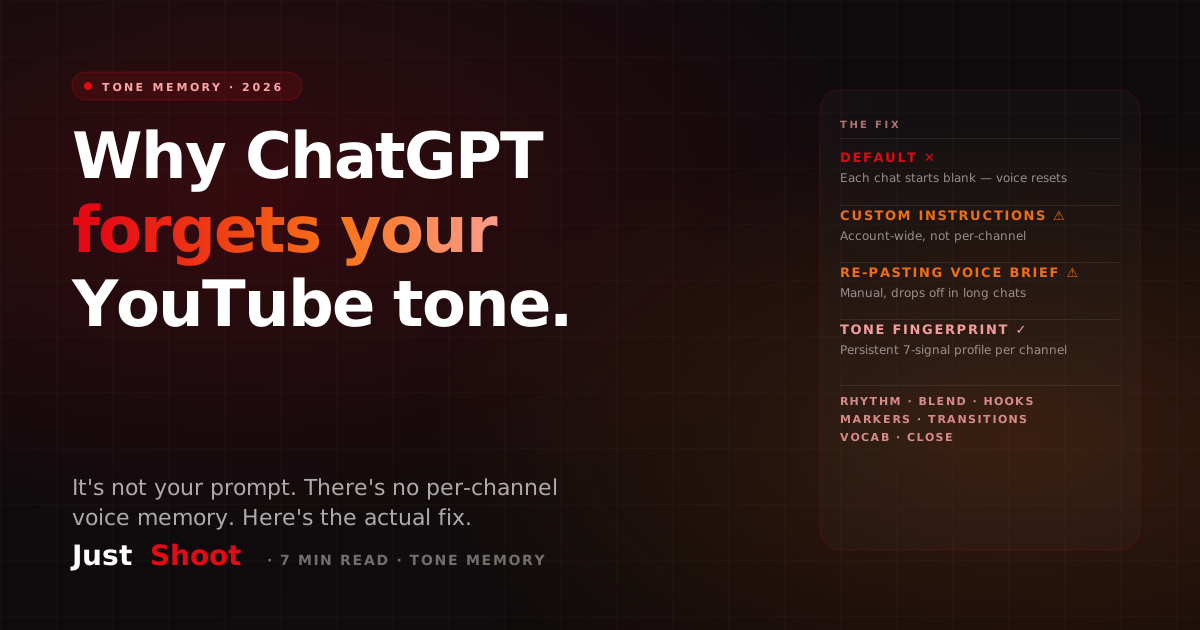
Why ChatGPT Forgets Your YouTube Tone (And How to Fix It in 2026)
ChatGPT can't remember your YouTube channel's tone between sessions — and Custom Instructions don't fix it. Here's what does, for Indian creators in 2026.
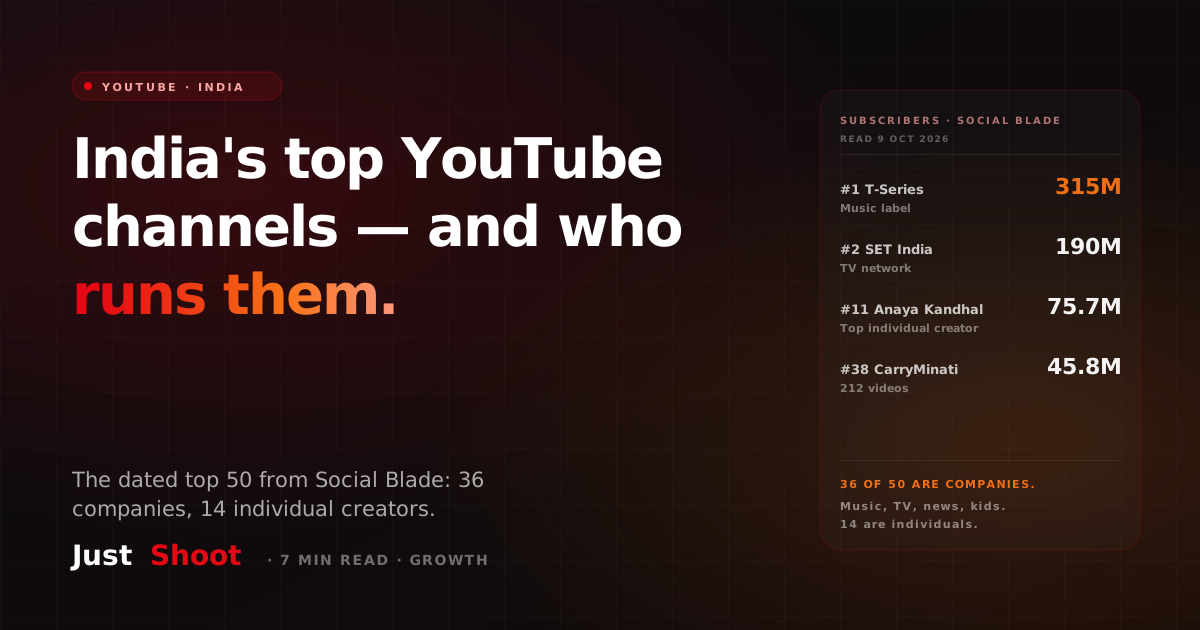
The Most-Subscribed YouTube Channels in India — and What They Have in Common (2026)
T-Series leads India's YouTube with 315 million subscribers. Of the top 50 channels, 36 belong to music labels, TV networks, news and kids' brands. Only 14 are individual creators.
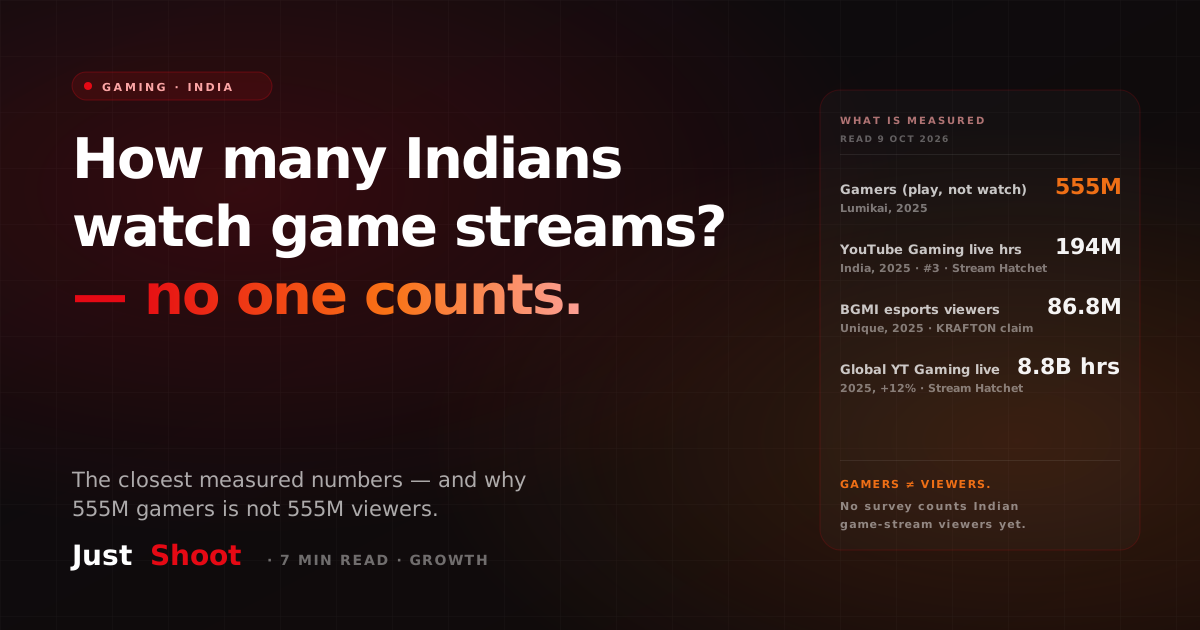
How Many Indians Watch Game Streams? (2026)
India has 555 million gamers, but nobody publishes how many watch game streams. Here are the closest measured numbers — hours watched, esports viewers — and what they count.