AI Script for YouTube Reaction Videos (India, 2026)
Most 'AI reaction video' tools generate a fake reacting avatar. The harder job — writing what YOU actually say around the clips — is what a reaction script is. The honest 2026 guide.
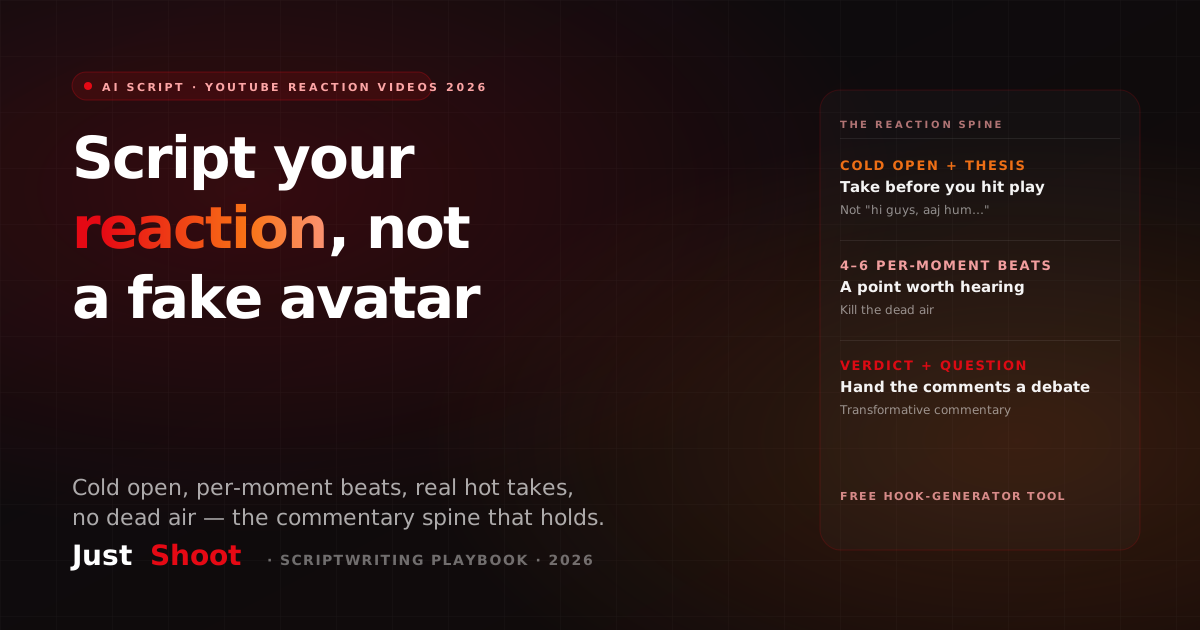
AI Script for YouTube Reaction Videos (India, 2026)
By Ashok Sachdev, Founder of JustShoot · Published 28 July 2026
Short answer: A reaction video isn't scripted word-for-word — but the parts that make or break it are: the cold-open setup, the beats you hit at each moment of the clip, your genuine hot takes, and a payoff at the end. Most "AI reaction video" tools miss this entirely — they generate a fake reacting avatar, not the commentary a real creator says. This guide is about writing the second thing: what you say around the clip, in your own voice, so the reaction lands instead of drifting into dead air.
Search "AI reaction video" and you'll get a wall of tools that animate an avatar making shocked faces over a clip. That's not what a reaction channel needs. What a real reactor needs is a commentary spine — the structure that keeps a 15-minute reaction watchable. That's a scripting problem, and it's what this guide (and the tool I build) is actually about.
Why "AI reaction video generator" is the wrong search
The tools that rank for reaction AI — avatar and emoji generators — solve a problem creators don't have. If you're a real person reacting to a trailer, a match, or a viral clip, you don't want an AI avatar pretending to react. You want your own reaction to be sharp, funny, and structured so viewers stay. The AI that helps there writes your commentary spine, not a synthetic face. It's the same trap as "AI regional script" tools that only dub: generating a reaction ≠ writing a reaction.
What actually goes in a reaction script
You don't script every "bro, dekh isko" — that would kill the spontaneity that makes reactions work. You script the spine and the beats:
The cold open (first 15–20s). Never start with "hi guys, aaj hum react karenge." Open with the stake or the take: "Is trailer ne pura internet hila diya — aur mujhe lagta hai sabne ek cheez miss ki." A strong first-30-seconds hook matters more on reactions than almost any format, because the clip itself hasn't started yet — your open is all you've got.
The setup before you hit play. Two or three lines of context and a promise: what you're reacting to, why it matters, and the specific thing you'll be watching for. This gives the reaction a thesis so it isn't just noises over a video.
The per-moment beats. Mark the 4–6 moments in the clip where you'll pause and actually say something worth hearing — a prediction, a callback, a genuine hot take. These beats are the difference between a reaction that gets clipped and shared and one that's 12 minutes of "whoa." Script the beat (what point you'll make), not the exact words.
The dead-air killers. The fastest way to lose a reaction viewer is a long silent stretch where you're just watching. Pre-load a tip, a joke, or a "watch what he does with his left hand" for the slow parts. Planning these is pure scripting.
The payoff. End on a verdict and a question, not "so yeah, that was the video." Give your honest final take and hand the comment section a debate: "10 me se kitne? Aur batao main galat kahan hoon."
Keep it fair-use-smart (and honest)
Reaction is strongest — and safest — when your commentary is genuinely transformative: you're adding analysis, criticism, humour, or context, not just replaying someone else's video with your face in the corner. Script real points of view at each beat; that's what makes it your video and not a re-upload. (This is craft guidance, not legal advice — always follow YouTube's own guidelines and the rights of the original creator.)
Write it in your reaction voice, consistently
Reaction channels live and die on personality. Your regulars come back for your specific energy — the sarcasm, the hype, the Hinglish rhythm. The problem with generic AI is it flattens that into a neutral narrator between clips. A persisted Tone Fingerprint keeps every reaction sounding like you, so video #80 has the same energy as video #1. Test any opener shape first with the free hook generator, then say it in your voice.
Reaction sub-formats that need this most
- Movie/trailer/teaser reactions — the setup thesis and the per-beat predictions are everything; a flat "cool" at the big moment wastes it.
- Gaming reactions (clutch clips, esports, funny fails) — fast, hype-driven beats; pairs with the best AI script tools for gaming channels.
- Roast/commentary reactions — the transformative-commentary bar is highest here; your take is the content.
- Music-video / first-time reactions — genuine emotional beats plus a knowledgeable verdict.
- News/drama reactions — needs a fact-checked, careful take (keep opinions clearly opinions).
Where JustShoot fits
Inside JustShoot's 9-agent pipeline, the script agent drafts your reaction spine — cold open, setup thesis, the per-moment beats, dead-air fillers, and the verdict — in your locked reaction voice, then hands you thumbnail prompts, SEO metadata and shorts cuts from the best beats. You still bring the spontaneity; it just makes sure the structure is there so the reaction doesn't drift.
JustShoot starts at Trial ₹0 (7 days, 2 scripts, no card), then Starter ₹499/mo (3 scripts), Creator ₹999/mo (7 scripts, most popular), Pro ₹1999/mo (15 scripts), and Studio is custom. Every plan runs the full pipeline; scripts don't roll over.
Want to check your reaction commentary sounds like you and not generic AI narration? Run a draft through the JustShoot Robot Score tool.
FAQ
Can AI write a script for a reaction video? Yes — not word-for-word, but the parts that matter: the cold open, the setup thesis, the per-moment beats where you make a point, dead-air fillers, and the closing verdict. AI that writes this commentary spine is different from "AI reaction video generators," which just animate a fake reacting avatar.
Isn't a reaction video unscripted? The reactions themselves are spontaneous, but the best reaction channels script the structure — what to say before hitting play, which moments to pause on, and how to end. Scripting the spine is what keeps a 15-minute reaction watchable instead of drifting.
What's the difference between an AI reaction generator and a reaction script tool? A generator produces a synthetic avatar or emojis reacting to a clip — useful for faceless novelty content. A script tool writes what a real creator says around the clip: setup, beats, takes, verdict. If you appear on camera, you need the second one.
How do I keep viewers watching through a long reaction? Mark 4–6 beats where you pause and say something genuinely worth hearing — a prediction, a callback, a hot take — and pre-load fillers for slow stretches so there's no dead air. Open strong and close on a verdict plus a question for the comments.
Is reacting to other people's videos allowed on YouTube? Reaction content is generally fine when your commentary is transformative — you're adding real analysis, criticism, or humour, not just replaying the original. This is craft guidance, not legal advice; follow YouTube's guidelines and respect the original creator's rights.
Ashok Sachdev is the founder of JustShoot, an AI content OS that writes YouTube scripts in your own voice for Indian creators. Connect on LinkedIn.
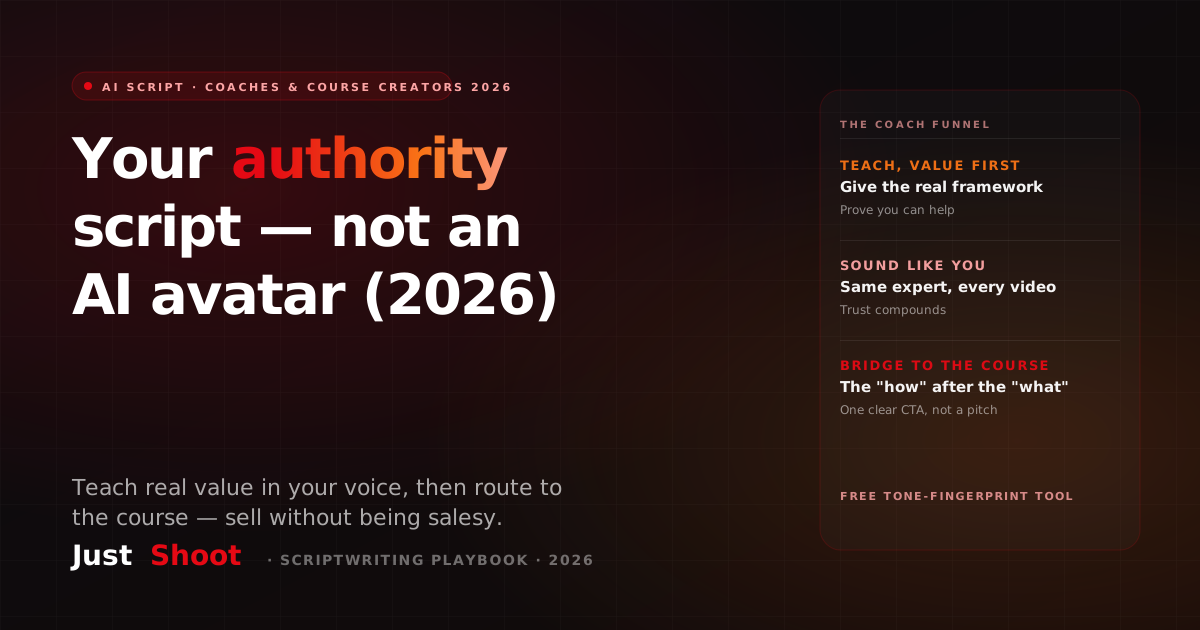
AI YouTube Script Tool for Coaches & Course Creators (India, 2026)
Most 'AI video for course creators' tools generate a talking avatar. What a coach's YouTube actually needs is an authority script in your own voice that sells the course without being salesy.
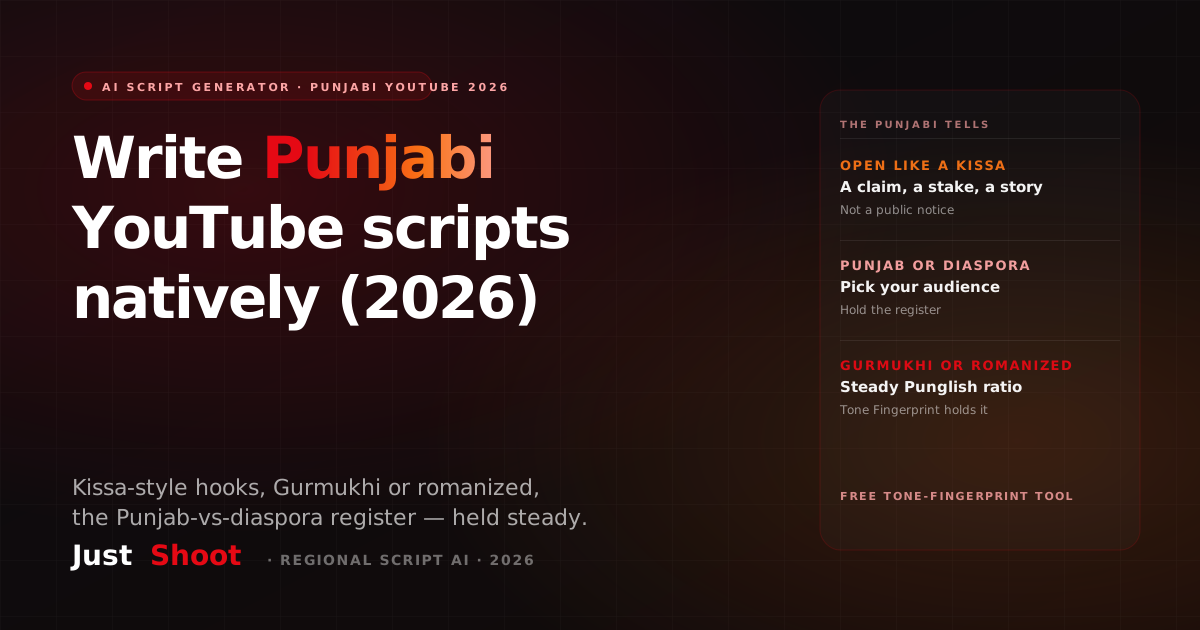
Punjabi YouTube Script Generator AI (2026)
Can AI write a Punjabi YouTube script with a real kissa-style hook, your Gurmukhi-or-romanized choice, and the right Punjab-vs-diaspora register — not dubbed, not translated? Honest 2026 guide.
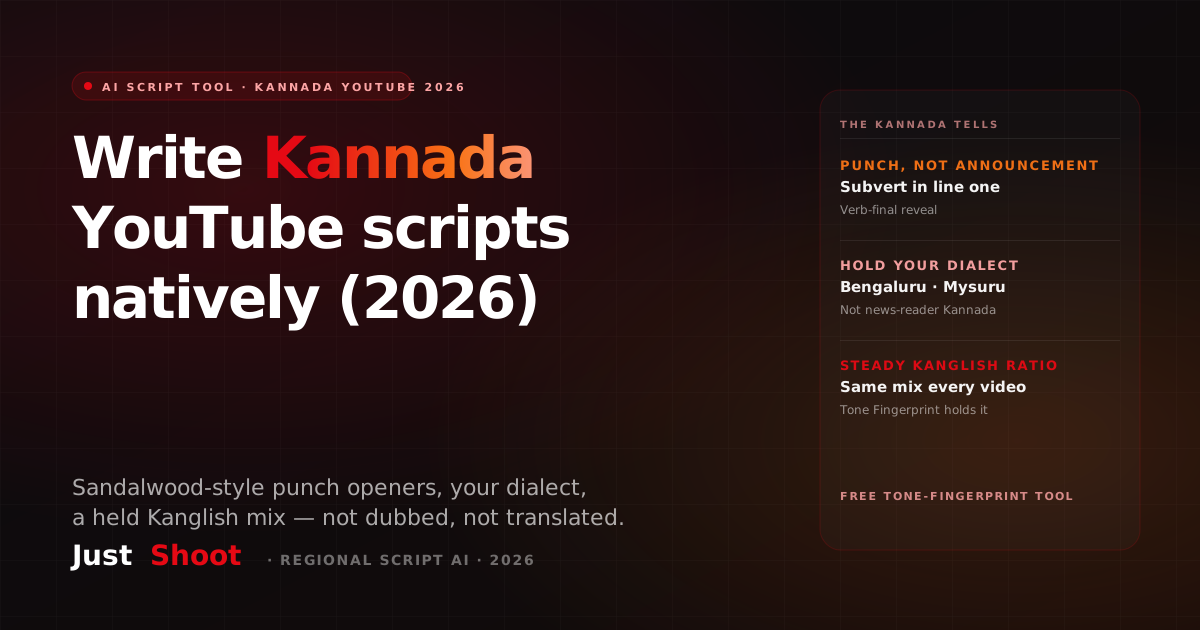
Kannada YouTube Script AI Tool (2026)
Can AI write a Kannada YouTube script with a Sandalwood-style punch opener, the right dialect, and a held Kanglish mix — not dubbed, not translated? The honest 2026 guide.