How to Script YouTube CTAs & End Screens That Convert (India, 2026)
Script YouTube calls-to-action that convert without sounding desperate — mid-roll vs end-screen placement, the value-tied subscribe ask, and the watch-time tradeoff, with Hinglish examples.
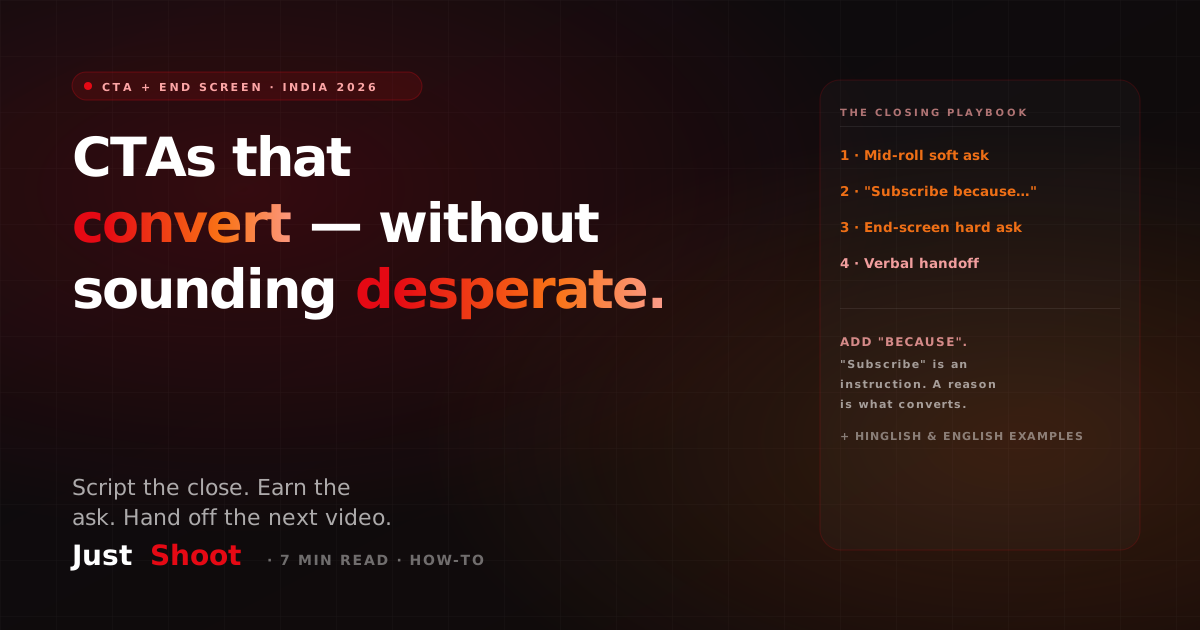
How to Script YouTube CTAs & End Screens That Convert (India, 2026)
By Ashok Sachdev, Founder of JustShoot · Published 2026-06-28
Short answer: To script a YouTube call-to-action that converts, tie the ask to the value the viewer just received and place it where attention is highest — a soft mid-roll ask right after a payoff moment, and a hard end-screen ask once the video has delivered. Never open with "smash that subscribe button" before you have earned it; that trains viewers to ignore you. The best CTA names why — "subscribe so you don't miss the next one of these" — and the end screen verbally hands off to the next video so watch-time continues instead of ending.
I build an AI scripting tool for Indian creators, and the most neglected part of every script is the close. Creators pour energy into the hook and the body, then tack on a rushed "like and subscribe." The close is where you convert a viewer into a subscriber and a subscriber into a return visit — it deserves to be scripted, not improvised.
Why the CTA is a scripting problem, not an afterthought
A subscribe button is not the goal; a reason to subscribe is. Viewers subscribe when they have just experienced value and you give them a low-friction, well-motivated ask in that moment. That timing and wording is a writing decision — which is why the call-to-action belongs in the script, alongside the hook and body, the same way the step-by-step script process treats it as Step 5, not a bolt-on.
Get it wrong and you do real damage: a desperate, early, value-free ask makes the channel feel needy and actively lowers conversion. A CTA is also the line most likely to read as lifted from a template, so it is worth passing the script through the free AI Script Robot-Score, which flags stock phrasing by name.
Mid-roll soft ask vs end-screen hard ask
Use two CTAs, in two different registers:
The mid-roll soft ask comes right after a clear payoff — the moment the viewer thinks "that was useful." Keep it light and one sentence. It works because the viewer is at peak goodwill and still watching.
- English: "If that one tip helped, a subscribe means the next video like this lands in your feed."
- Hinglish: "Agar yeh tip kaam aayi, to subscribe kar do — agli aisi video tumhare feed mein aa jayegi."
The end-screen hard ask comes after the video has fully delivered. Now you can be direct, because you have earned it. Pair it with the verbal handoff (below).
- English: "You've got the full framework now. Subscribe, and watch this next — it's the exact tool I mentioned."
- Hinglish: "Ab tumhare paas poora framework hai. Subscribe karo aur yeh dekho — wahi tool jo maine bola tha."
The "subscribe because" rule
The single highest-leverage change to any CTA is adding the word because — explicit or implied. "Subscribe" is an instruction; "subscribe because I post one of these every week" is a reason. Viewers act on reasons, not instructions.
Tie the reason to a future benefit the viewer can picture: more of the thing they just enjoyed, a series they will not want to miss, or a problem you will solve next week. In Hinglish, the value-tied ask lands especially naturally — "agar value mili to subscribe kar dena, har hafte aisa content aata hai."
The end-screen verbal handoff
The end screen is YouTube's most powerful watch-time tool, and most creators waste it by going silent while the cards float. Script a verbal handoff instead: in the last 15-20 seconds, tell the viewer exactly which video to watch next and why it follows from this one. This converts an ending into a continuation, and continued sessions are what the algorithm rewards.
- Example: "If you want the next piece of this — how to actually structure the script body — that video's on the screen now. I'll see you there."
Point the handoff at a genuinely related video; a random "watch this next" underperforms a logical next step. This is also where distribution thinking starts — the same logic behind turning one video into many, covered in repurposing workflows. And the handoff doesn't have to stop at the end screen — a well-timed Community Tab post between uploads keeps that next-video momentum alive until you publish again.
The watch-time vs CTA tradeoff
Every second spent on a CTA is a second not spent delivering content, and a clumsy CTA mid-video can trigger drop-off. The resolution: keep the mid-roll ask to one sentence and place it after a payoff (when goodwill is high, not during a lull), and put the longer ask at the end where remaining viewers are your most engaged. Never interrupt your best content with a subscribe plea — earn the moment first.
For the opening that sets all this up, see the first-30-seconds hook guide; for keeping the whole thing in your voice, see writing scripts in your own voice.
Where JustShoot fits
Inside JustShoot's 9-agent pipeline, the script agent writes the close — both the soft mid-roll ask and the end-screen handoff — in your channel voice, tying the ask to the specific value the video delivered. The distribution agent then suggests the logical next video for the handoff. The CTA stops being an afterthought and becomes part of the script.
JustShoot starts at Trial ₹0 (7 days, 2 scripts, no card), then Starter ₹499/mo (3 scripts), Creator ₹999/mo (7 scripts, most popular), Pro ₹1999/mo (15 scripts), and Studio is custom. Every plan runs the full pipeline.
Want to check that your CTAs sound like you and not a generic template? Run a script through the JustShoot Robot Score tool.
FAQ
Where should I put the call-to-action in my YouTube script? Two places: a one-sentence soft ask right after a payoff moment in the middle, and a direct ask plus end-screen handoff at the very end. Avoid asking for a subscribe before you have delivered value.
How do I ask for a subscribe without sounding desperate? Tie the ask to a reason — "subscribe because I post one of these every week." A value-tied ask converts; a bare "smash subscribe" before you have earned it lowers conversion and makes the channel feel needy.
What is an end-screen verbal handoff? A scripted line in the last 15-20 seconds that tells the viewer exactly which related video to watch next and why it follows. It converts an ending into a continued session, which the algorithm rewards.
Do CTAs hurt watch time? A clumsy mid-video CTA can, which is why you keep the mid-roll ask to one sentence placed after a payoff. The longer ask goes at the end, where only your most engaged viewers remain.
Can AI write my YouTube CTA? Yes — an AI scripting tool can draft both the mid-roll and end-screen asks tied to your video's value, but it should write them in your channel voice so they do not read like a templated subscribe plea.
Ashok Sachdev is the founder of JustShoot, an AI content OS that writes YouTube scripts in your own voice for Indian creators. Connect on LinkedIn.
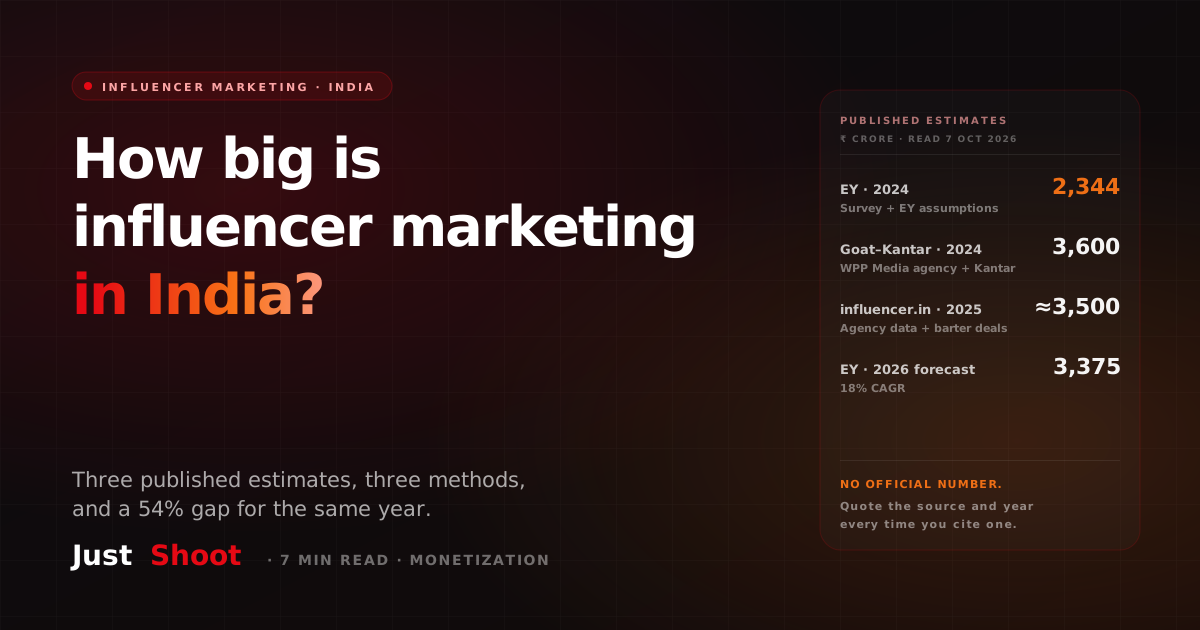
How Big Is Influencer Marketing in India? Three Estimates Compared (2026)
EY, WPP Media's Goat Agency with Kantar, and influencer.in each size India's influencer marketing market. Their 2024 numbers differ by over half. Here is why.
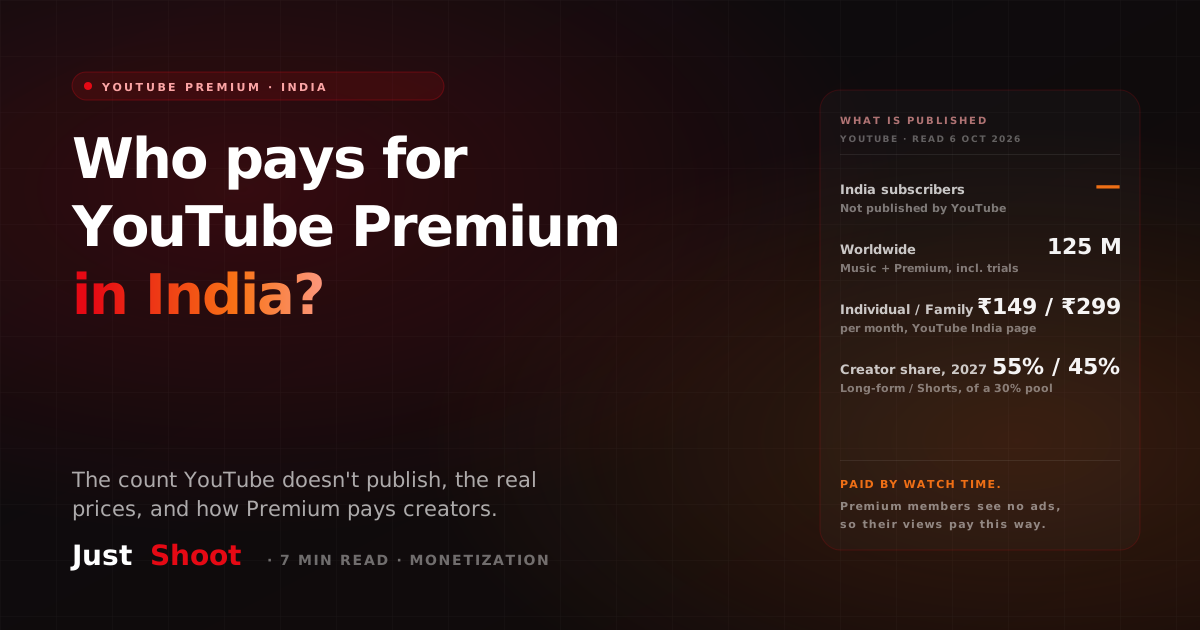
How Many People Pay for YouTube Premium in India (2026)
YouTube publishes 125 million Premium and Music subscribers worldwide, not an India count. Here are India's real Premium prices and how Premium pays creators.
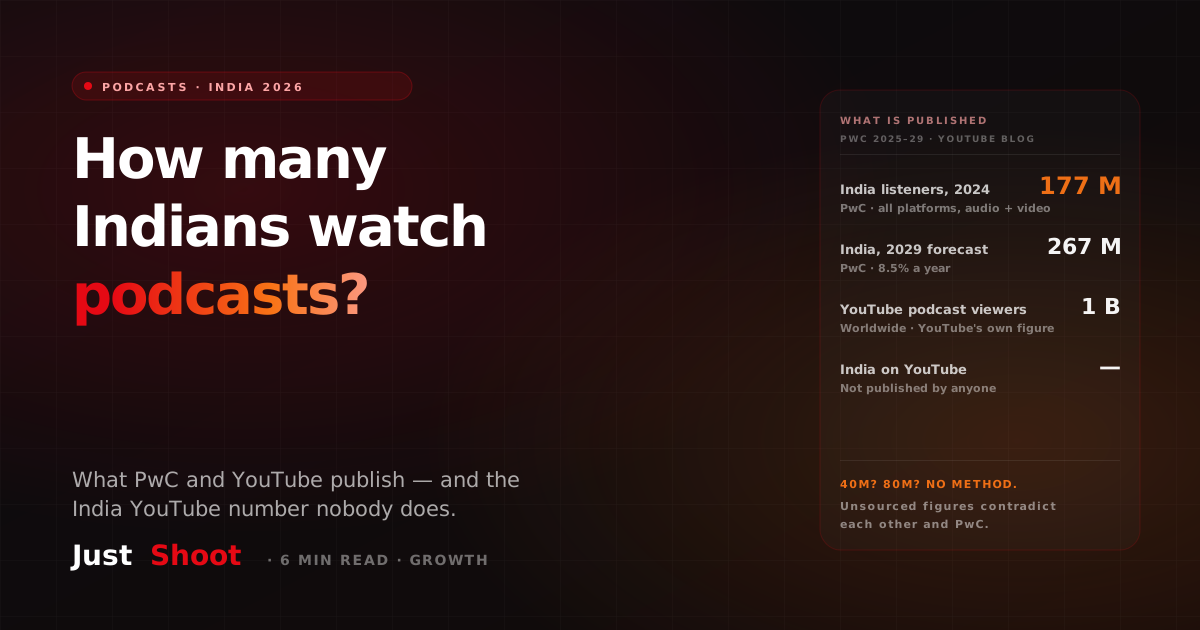
How Many Indians Watch Video Podcasts on YouTube (2026)
PwC counts 177 million monthly podcast listeners in India; YouTube counts 1 billion podcast viewers worldwide. Neither gives an India YouTube number.